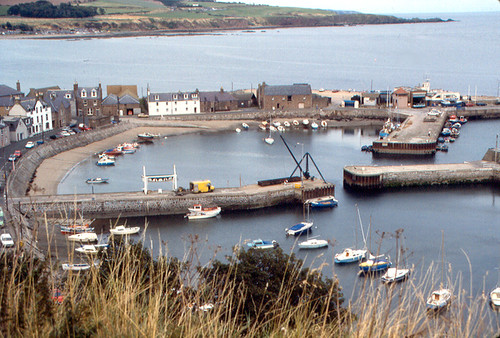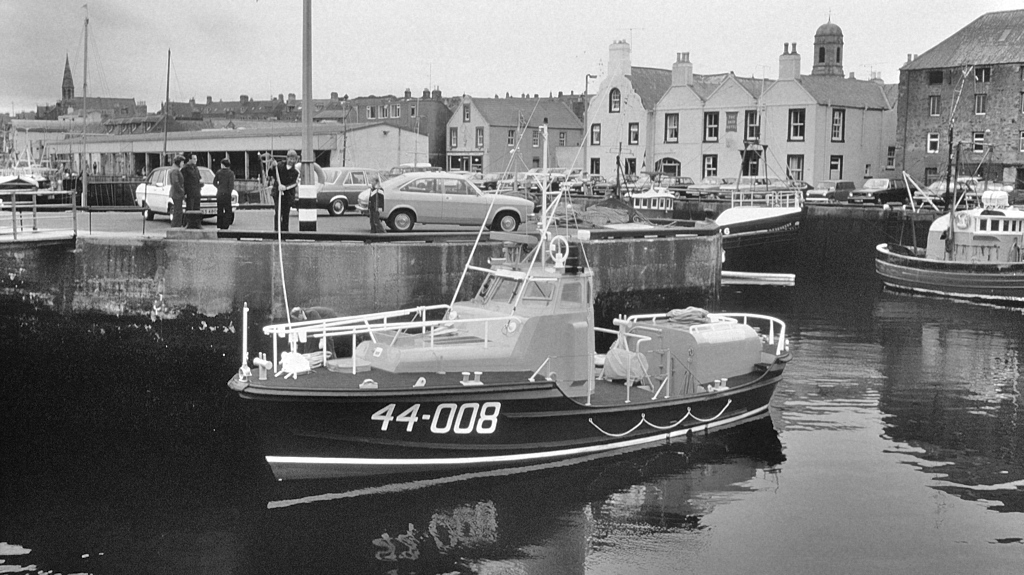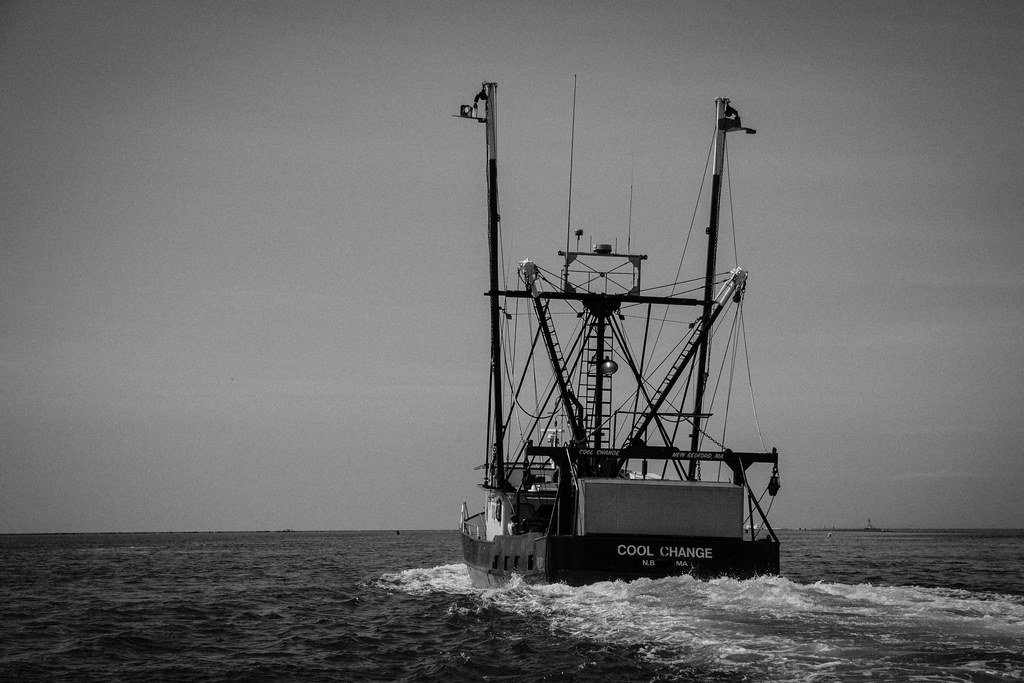
Eyemouth harbour, on the Berwickshire coast of southeast Scotland, is small enough that a stranger can walk the entire working waterfront in fifteen minutes. The harbour holds, on a Wednesday morning in June, eleven fishing vessels, of which seven are Nephrops trawlers between 12 and 22 metres long.
Nephrops norvegicus, known to British supermarket shoppers as scampi, to French restaurants as langoustine, and to most of the Scottish boats that catch it as simply prawns, is the most valuable shellfish landed in the United Kingdom by value. The 2024 landings were worth about £108 million across the whole UK fleet.
The Eyemouth fleet lands prawns from the Farne Deeps, a productive mud-bottom ground that extends roughly forty miles offshore between Northumberland and the southeast of Scotland. The ground is fished by trawlers from Eyemouth, North Shields, Amble, and a few smaller East Coast ports.
The price of Nephrops at the dockside varies sharply with size grade and with whether the fish are landed live or as tails. The largest live grade, sold whole to French and Spanish wholesalers, was making £18 to £24 a kilo at the Eyemouth fish market in early June 2026. The smaller tail grade, sold to UK breading and processing plants, was £4.20 to £5.60.
The live trade is the more profitable end of the market, but it is also the more difficult. Live prawns must be landed within twelve to eighteen hours of capture, held in seawater tanks at carefully controlled temperatures, and shipped within twenty-four hours by refrigerated truck to the Continent. The supply chain is a half-day to St Pancras, half a day across France, and a day and a half to Madrid.
Post-Brexit border arrangements have added cost and friction to the live shipment business. The customs paperwork for a single truck of live shellfish to Spain is, according to one Eyemouth merchant, roughly forty pages of certificates and declarations. The truck cannot leave until the paperwork is complete.
The skipper of the Renown, a 17-metre trawler that has fished the Farne Deeps since 2009, is a man named Iain Murray. He is fifty-four and has been at sea since he left school in Coldingham at sixteen. The boat is owned outright by his family. He fishes with a crew of three, two of whom are Filipino nationals working under a UK seafarer's transit visa.
Murray's boat lands about 230 tonnes of Nephrops a year, of which roughly 60 per cent goes to the live market and 40 per cent to the tail market. The boat's annual gross is somewhere between £900,000 and £1.1 million depending on prices and weather. The crew share is calculated weekly after fuel and ice.
The fishery is managed under a UK total allowable catch system inherited and modified from the EU Common Fisheries Policy after 2020. The 2026 TAC for Functional Unit 6 — the Farne Deeps unit — is 1,720 tonnes, which is roughly 8 per cent below the 2025 number and follows ICES scientific advice based on the most recent underwater television survey of the burrow density on the ground.
The UTV survey is a useful tool because Nephrops live in burrows on muddy bottoms and are, for stock assessment purposes, more accurately counted by camera than by trawl. The ICES advice has tended, since the survey method was adopted in the mid-2000s, to be reasonably stable and reasonably accurate.
What has been less stable is the market. The COVID period collapsed the European restaurant trade temporarily. The post-Brexit border friction reduced the speed and predictability of live shipments. The cost-of-living pressures in the UK during 2023 and 2024 reduced demand for scampi at the lower end of the market.
By mid-2025, the market had stabilised at a price point that left most of the Eyemouth fleet modestly profitable. The 2026 season has begun under conditions that resemble 2025: live prices firm, tail prices soft, fuel at around 78 pence a litre, weather variable.
The Eyemouth fish market, run by the Eyemouth Harbour Trust, is one of the smaller working fish auctions in the UK. It opens at 7:30 each weekday morning when there are boats in. The auctioneer is a woman named Margaret Sime, who has called the market since 2014 and who knows the size grades of every boat in the harbour by sight.
The buyers at the auction are a mix of local processors, Scottish wholesalers, and a small number of agents representing the Continental live trade. The market is conducted in English with occasional bursts of fishing slang that an outsider does not always follow.
What the market establishes each morning is the day's price for each grade. The price is then the basis for the crew shares, the boat's accounting, and the merchant's onward sales. The price is set by the room, in real time, on a five-minute auction cycle per boat's catch.
Eyemouth's fishing tradition is long. The town lost 189 men in a single storm on October 14, 1881, when the fleet was caught at sea by a sudden depression. That disaster, known locally as Black Friday, removed roughly a quarter of the working male population of the town in an afternoon. The memorial in the harbour square names every man lost.
The town's population is about 3,500 in 2026. The fishing industry, broadly defined, employs around 220 people directly. The processing plants in nearby Burnmouth and Berwick employ another 180. The wider economy is sustained by tourism, by a small marine-engineering sector, and by commuting to Edinburgh.
Murray's view, expressed in the wheelhouse of the Renown on a Wednesday afternoon, is that the prawn fishery has been a good business for thirty years and is likely to remain a good business for another twenty if the management plan continues to hold, the live trade infrastructure is maintained, and the boats can find crews.
Finding crews is the constraint that most concerns him. The two Filipino deckhands on the Renown are paid on a contract that meets the National Minimum Wage and is administered through a Hull-based manning agency. The arrangement is legal and, in Murray's view, fair to all parties. It is also, he notes, not a long-term substitute for local young people learning the trade.
Local young people in Eyemouth, as in Stonington and Vestmannaeyjar and Kilronan, are not in any large number choosing to enter the fishery. The reasons are familiar: the work is hard, the hours are unsocial, the income is variable, and the wider regional labour market offers alternatives that do not require getting up at four in the morning to go to sea. The fishery, here as elsewhere, continues to function on the labour of those who are already in it, for as long as they remain.
Filed under