The office of the Maine Herring Co-operative occupies the second floor of a brick building on Main Street in Rockland, above an outdoor outfitter that has been there since 1962. The co-op has six employees, all of them women, and represents the eleven vessels that still hold Category A or B herring permits in the state.
The general manager is Eliza Kettering, who took the job in 2019 after fourteen years at the Gulf of Maine Research Institute. The office walls hold framed photographs of seiners at the dock in Rockland, Portland, and Gloucester, most of them dated between 1978 and 2004. The dates are not coincidental.
Atlantic herring, Clupea harengus, is the bait that the Gulf of Maine lobster fishery has, for most of the past forty years, run on. When herring is abundant and cheap, lobster fishermen bait their traps with it. When herring is scarce, they substitute pogies, redfish racks, frozen rockfish from the Pacific, or anything else they can negotiate.
The federal quota for the Gulf of Maine herring stock has fallen, in roughly straight-line fashion, from about 145,000 metric tons in 2014 to 22,000 metric tons for the 2026 season. The reasons are debated. The most-cited factors are warming bottom waters in the Gulf of Maine, mid-trophic predation pressure, and a series of poor year classes between 2013 and 2019.
The eleven boats in the co-op share the Maine portion of the quota under a sector allocation arrangement first adopted in 2020. Each boat receives an annual sub-allocation. The 2026 numbers, distributed to members in February, range from 480 to 1,840 metric tons per boat.
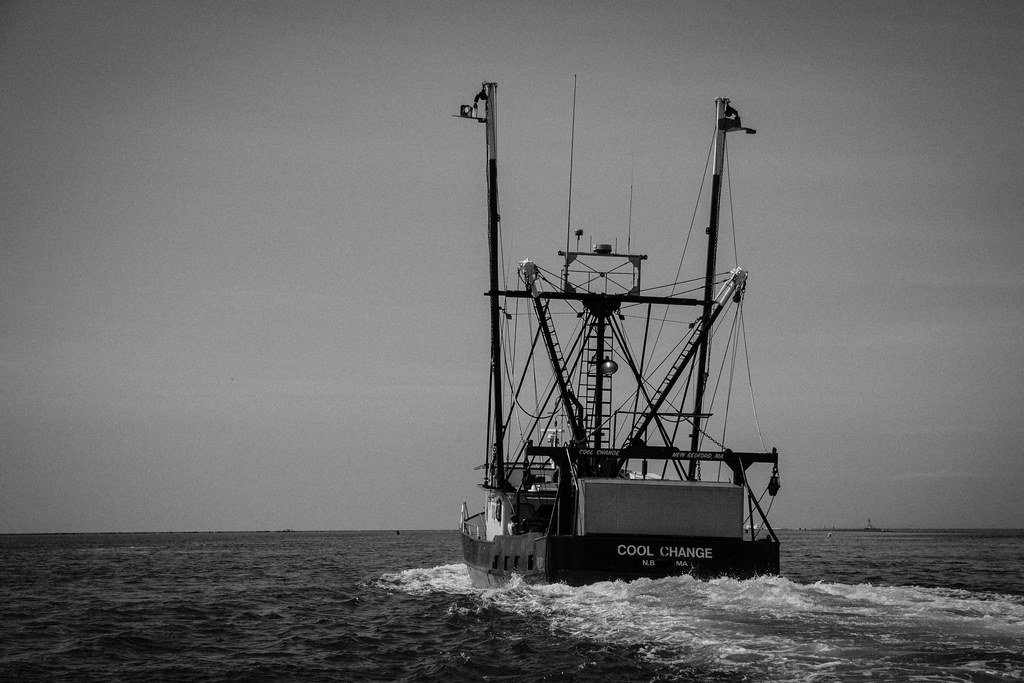
The 1,840-ton boat is the Sandra Lee, a 96-foot purse seiner out of Rockland owned and run by the Pelletier family since 1987. The boat has been highliner in the Maine fleet in twenty-one of the past thirty years. Her captain, Marc Pelletier, is fifty-three and has been at the wheel since 2002.
Pelletier fishes a season that runs from June through October under the current regulations. In the 2025 season he caught his 1,840-ton sub-allocation in nineteen days at sea. He spent the rest of the season tied up. He paid his eight-person crew a guaranteed wage anyway.
Most of the catch goes to bait. The price, delivered to a lobster co-op dock in Stonington or Vinalhaven or Beals Island, is somewhere between $0.45 and $0.62 a pound depending on the week. The price was $0.18 in 2012. The increase is not a sign of health.
What the increase reflects is a structural mismatch: the lobster fleet still wants the bait, and there is not enough of it. Maine lobster boats fish about three million traps in any given year. Each trap is rebaited every three or four days through the active season. The math, even at conservative assumptions, requires more bait than the herring quota now provides.
The substitution market — pogies from the mid-Atlantic, redfish from the Gulf of Mexico, frozen rockfish from the North Pacific — has filled most of the gap. Bait costs for a Stonington lobsterman in 2026 average about 17 per cent of gross stock, up from 9 per cent in 2014.
Kettering's job at the co-op is part fishery science, part collective negotiation, and part patience. She spends about a third of her week on a conference line with the New England Fishery Management Council's herring committee. She spends another third on the phone with member captains.
The last third is taken up by what she calls, with no particular irony, succession planning. The eleven boats in the co-op are owned by nine families. The average age of the principal owners is sixty-two. Three boats are likely to leave the fishery in the next five years.
Whether the permits attached to those boats can be transferred, sold, or retired in a way that preserves the co-op's collective allocation is one of the legal and political questions Kettering has been working on since 2021. The answer involves federal regulations she does not have the authority to change.
On a Wednesday in early May, Pelletier is at the office to sign a piece of paper about an electronic monitoring system that the Council has just made mandatory for the next season. The system involves four cameras, a hard drive, and a monthly upload to a third-party reviewer who works on contract from a small office in Rhode Island.
Pelletier is not opposed to the cameras. He is opposed to the cost, which the regulation does not reimburse. He estimates the installation at $14,000 and the annual operating cost at $9,000. For a 1,840-ton boat at current prices, that is roughly 1.4 per cent of gross. For a 480-ton boat, it is closer to 5 per cent.
The co-op has applied for a federal grant to cover installation costs across the fleet. The grant was filed in November 2025. The response, if it comes, is expected in the third quarter of 2026, which is to say after the camera deadline.
Kettering shows a visitor a chart on the wall behind her desk. The chart is the Maine herring landings series from 1950 to 2025. The line peaks at about 130,000 metric tons in 1968 and ends at about 16,500 metric tons in 2025. The shape is recognisable.
What the chart does not show is the structure of the fishery in any given year. In 1968, the boats were small, the canneries were many, and the price was low. In 2025, the boats are few, the canneries are gone, and the price is high. The volume tells you something, but not the story.
The Maine sardine canneries that processed most of the inshore herring catch through the twentieth century are all closed. The last one, Stinson Seafood at Prospect Harbor, shut in 2010. The boats that survived the closures did so by transitioning entirely to the bait market, which is the market the lobster fishery has needed them in for the past fifteen years.
Whether the bait market needs them in the future depends on what the lobster fishery looks like, which depends on water temperature, on right whale regulations, and on the structure of the Canadian fishery that supplies the December market. None of these is a question Kettering can answer from her office above the outfitter shop.
What she can do is keep the eleven boats together, file the paperwork, attend the meetings, and try to make sure that whatever the fishery looks like in 2030, the people who have spent their working lives in it have a seat at the table where the decisions get made.
Filed under