The gravel airstrip at Naknek, on the southern shore of Bristol Bay, sees about forty inbound flights a week in late May. The passengers are mostly fishermen arriving to ready their boats and set-net camps for a season that begins in earnest around June 25 and is, in most years, essentially over by July 18.
The Bristol Bay sockeye fishery is the largest wild salmon run on Earth by biomass and by economic value. The total run in 2022, an unusual year, was about 78.3 million fish. The 2025 run was 51.4 million. The 2026 forecast, released by the Alaska Department of Fish and Game in late March, projects a return of approximately 47.2 million sockeye, of which about 31 million are expected to be available for harvest.
The fishery is divided into five districts, named for the rivers their fish enter: Naknek-Kvichak, Egegik, Ugashik, Nushagak, and Togiak. Each district has its own boats, its own processors, its own dockside price negotiations, and, in any given year, its own version of how the season is going.
There are roughly 1,860 limited-entry drift gillnet permits in the bay. The permits were originally issued in 1975 under Alaska's limited entry system and have been transferable since then. The number of drift permits has been fixed for nearly fifty years.
The market price of a drift permit is one of the most-watched indicators in the fishery. The price peaked above $250,000 in 1989, fell below $20,000 in the early 2000s, and has, since 2018, ranged between $190,000 and $310,000. The price in May 2026, according to the two main permit brokers, is around $220,000.
The price of a permit reflects expected future earnings, expected stock health, and the general appetite of the next generation of fishermen for entering a fishery that is geographically remote, physically demanding, and dependent on a price that varies significantly year to year.
The dock price for sockeye in Bristol Bay in 2025 was $1.30 a pound for chilled fish and $1.05 for unchilled, plus a quality bonus and a post-season adjustment that brought the realised average closer to $1.45. The 2024 price was $1.05 base. The 2022 price was $1.50 base. The 2021 price was $1.05 base.
These prices set the income for about 6,200 commercial fishermen who participate in the fishery in a typical season. A drift boat with a good location and a good captain can land 100,000 pounds of sockeye in a three-week season. The math is straightforward. The math also assumes the fish show up where the boat is.
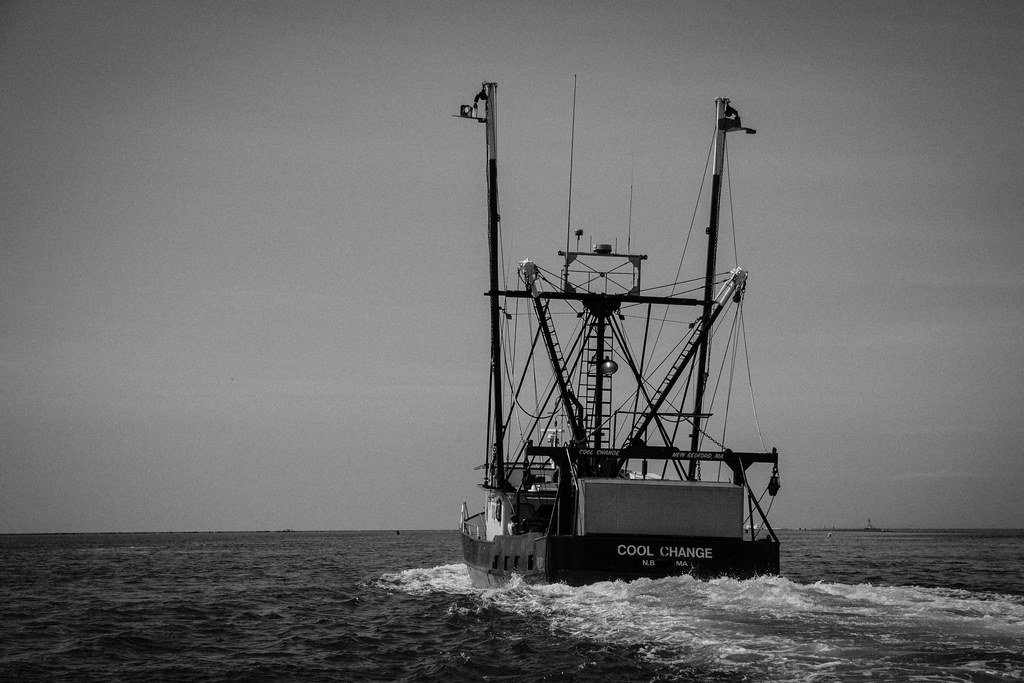
Tom Helgeson, who has been drifting in the Nushagak district since 1987, is in Naknek this week to ready his 32-foot bowpicker, the Karen Marie, for the season. The boat has spent the winter on blocks in a fenced yard a quarter-mile from the harbour. He found a small leak at the rudder post that he is fixing with a friend who flew up from Anchorage on Sunday.
Helgeson owns one of the older drift permits in the bay. He bought it in 1989 for $190,000 and has paid it off twice. He fishes with a two-person crew in most years. The 2026 crew is his son, who is twenty-six, and a long-time deckhand named Sarah Chen who has been with him since 2019.
The set-net sites — small parcels of beach where a fisherman is permitted to anchor gillnets perpendicular to shore — are the other half of the bay's commercial fishery. There are about 980 set-net permits in the bay. They generally land about a quarter of the harvest in any given year.
Set-net families often hold their sites for generations. The cabins along the beach in the South Naknek district, where about 150 sites are clustered, belong, in many cases, to families that have fished those specific stretches of beach since the 1930s. The cabins are unheated, off-grid, and accessible only by skiff or four-wheeler at low tide.
The processing capacity in Bristol Bay is provided by about twelve major companies operating out of shore plants at Naknek, Dillingham, Egegik, and Ugashik. The biggest are Trident Seafoods, Peter Pan Seafood, and Silver Bay Seafoods. Each processor signs delivery agreements with hundreds of permit holders in the months before the season.
The processors set the base price each year through a negotiation that, in practice, is led by Trident and Silver Bay and broadly followed by the others. The 2026 base price has not been announced as of this writing. The conversation in Naknek over coffee this week is that it is likely to be in the $1.20 to $1.40 range, reflecting the modest forecast and a global salmon market that has softened somewhat after a strong 2024.
The other variable in any Bristol Bay season is timing. The run is concentrated in a roughly three-week window. The peak day in any given district may produce 3 to 5 million fish. Boats and processors are organised to absorb the peak, but the absorbing has limits.
When the run comes faster than the processors can handle, the processors impose delivery limits. A boat may be told it can deliver only 5,000 pounds a day, or that it can fish only every other tide. In a peak year, fish are sometimes left in the water. In 2018, an estimated 4 million sockeye were not harvested because the processors could not handle them.
Helgeson has seen good years and bad years. He says the 2026 forecast does not worry him, because the forecast in any given year is, in his experience, only loosely connected to what actually shows up. The 2021 forecast was 50 million and the actual return was 66 million. The 2023 forecast was 49 million and the actual was 54 million. The 2024 forecast was 39 million and the actual was 41 million.
What does worry him, and what worries most of the older fishermen in Naknek this week, is the long-term picture for salmon habitat in the bay's drainages. The proposed Pebble Mine, near the headwaters of the Kvichak and the Nushagak, was effectively blocked by an EPA Clean Water Act determination in 2023. That determination is being challenged in court. The case is on the docket for the Ninth Circuit in late 2026.
The Pebble case has been going on for almost twenty years. The bay's fishermen have organised, lobbied, and contributed to legal funds throughout. They have done so because they understand, in a way that the lawyers and the regulators and the financial analysts often do not, that the value of a permit in their pockets depends entirely on the continued existence of a wild salmon run upstream.
Helgeson will spend tomorrow on the boat. The next day he will pick up his son at the airstrip. By June 15 the boat will be in the water and the radios will be on and the season will be a matter of waiting for the first commercial opener, which the Department will announce when the in-river escapement targets begin to be met.
Filed under