On the eleventh of January the Marine Hotel on Stonehaven's harbour pinned a handwritten notice to its public-bar door: Closed for renovation until 22 February. The lounge bar will operate reduced hours. The notice was written in blue biro on the back of a delivery slip from Punch Pubs.
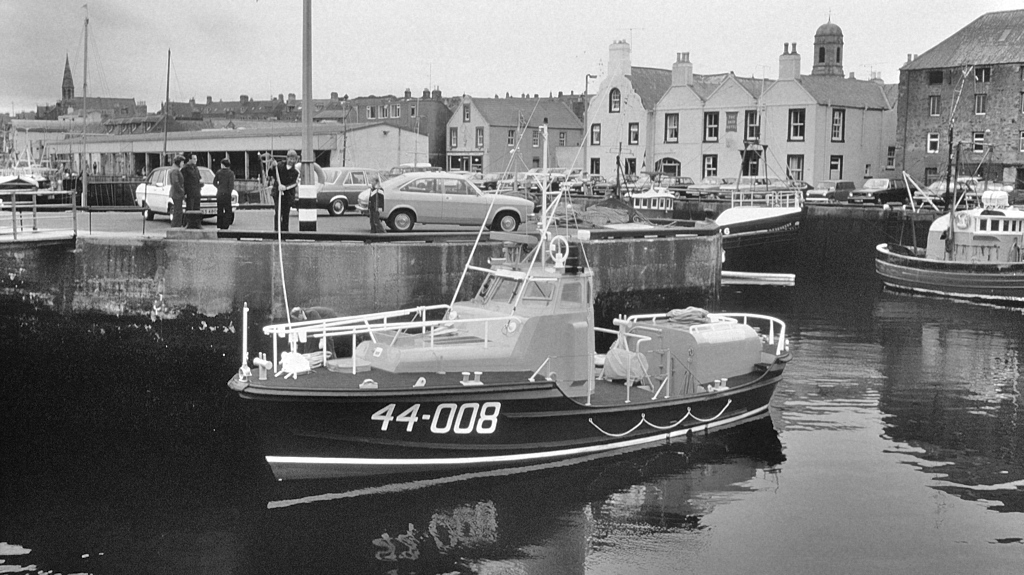
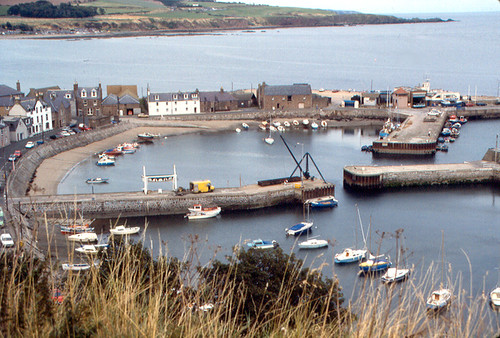
Stonehaven, fifteen miles south of Aberdeen, has a population of around 11,600 and a harbour that has been working since the fourteenth century. Its current fleet is small, perhaps eight inshore creel boats and a handful of charter and pleasure craft, but the harbour itself is the social centre of the town in a way that is unusual on the Aberdeenshire coast.
The Marine Hotel sits on the southwest corner of the harbour, in a four-storey building dating from 1843. Its public bar, known locally as the Harbour Bar, holds about forty people seated and many more standing. It is not Stonehaven's only pub, but it is the one where the morning trade arrives at six-thirty for a tea and a roll, and the evening trade arrives at five and stays until the bar closes at eleven.
The closure for renovation, the first since 1997, was driven by a plumbing failure under the bar floor that the manager Eilidh Strachan described as "long overdue and finally undeniable." The work would replace the entire ground-floor water system, the bar fixtures, and the public-bar toilets, which had been installed in the early 1980s.
"We could have done it in pieces over six months," Strachan said, in her small office on the first floor. "We chose to close for six weeks. The regulars deserved better than a half-functioning bar."
The regulars, predictably, took the news in their stride and then went looking for somewhere else. Stonehaven offers options. The Ship Inn, three buildings along the harbour, opened earlier than usual on weekday mornings to accommodate the displaced. The Marine Hotel's own lounge bar, on the floor above the public bar, extended its hours but kept its quieter atmosphere.
The most surprising shift was to the Carron Restaurant, an art-deco building three streets back from the harbour. The Carron's bar trade in January was up forty percent on the year before, according to its proprietor, Hilda Drummond. Drummond, who has run the restaurant since 2003, said the new customers were polite, predictable, and mostly drinking the Belhaven Best on tap.
"They come in at eleven for a half," Drummond said. "They have a second at noon. They leave for lunch. They come back at five. They have two more. They are at home by half past six. They are not what people think a Stonehaven harbour drinker is."
What a Stonehaven harbour drinker is, on closer inspection, is older than the visitor expects. The Harbour Bar's regular weekday-morning trade is roughly sixty percent retired tradesmen, fishermen, and former oil-rig workers, of whom most are between sixty-five and eighty. The afternoon trade is more mixed. The evening trade, especially on a Friday, is younger but still domestic.
On a Tuesday morning in early February, the displaced Harbour Bar regulars had largely settled at the Ship Inn. The manager there, Calum Penny, had moved a long table closer to the window to accommodate the standing group. He had also, at his own initiative, started doing the same bacon-and-tattie scone that the Marine Hotel had been doing for thirty years.
"It wasn't a secret recipe," Penny said. "It's a tattie scone with bacon. But the men were missing it. So we did it. It's seventy pence cheaper at the Ship. They noticed that too."
The Stonehaven harbourmaster's office, on the north quay, kept its January and February rhythm unchanged. The harbour's working trade in winter is light: gear maintenance, vessel inspection, the occasional out-of-season catch landed for the local processor. The harbourmaster, Donnie Mearns, has held the post since 2009 and lives in a flat above his office.
Mearns said the closure of the Harbour Bar was not, technically, his concern. He also said he had not been in to the Ship Inn yet but expected to be by the second week of February.
On the fourteenth of February, the third Friday of the closure, the Marine Hotel held a brief evening event at the harbour wall to mark the discovery of a Victorian penny pressed into the mortar of the renovated bar floor. The penny, dated 1881, had been put there during a previous renovation by a workman whose initials, J.M., were carved into the same brick.
The bar manager Eilidh Strachan said the penny would be returned to the mortar of the new floor, with the addition of a 2026 penny and a small stainless-steel plate engraved with the names of the current bar staff and the contractor. "It seemed the right thing," she said. "We're not the first to redo this floor. We won't be the last."
On the twenty-second of February the Harbour Bar reopened on time. The new floor was a hard-wearing oak laminate. The new toilets were tiled and well-ventilated. The bar fixtures were close enough to the originals that the regulars complained about them only in general terms, as a matter of principle.
The opening day's trade was steady from eleven in the morning. The bacon-and-tattie scone, restored to the menu at its old price, sold out by one. The first pint was pulled by Greta Cuthbert, who has been a Harbour Bar regular since 1971 and was given the honour by the bar staff in recognition of her seniority. Cuthbert is eighty-three. She paid for the pint.
At the Ship Inn down the harbour, the trade returned to its usual level over the following week. The long table by the window remained moved. The bacon-and-tattie scone remained on the menu. Calum Penny said he was keeping it.
At the Carron Restaurant, three streets back, the bar trade settled. Hilda Drummond said some of the temporary regulars stayed, perhaps a dozen, and that they had blended into the lunch trade in a way that suited the restaurant. The Belhaven Best stayed on tap. The retired tradesmen who had drunk it through January were welcome, she said, for as long as they wanted.
Outside, on the harbour wall, the February wind had eased. The fleet was tied up two-deep at the inner pier. The light over Dunnottar Castle to the south was the colour of slate. The town was, by all visible measure, the same as it had been in December. It was also, in a quieter way, slightly rearranged.