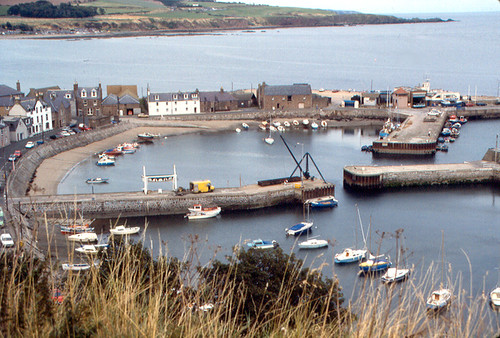
On the shortest day of the year the wind in Eyemouth came hard off the North Sea and pushed the rain sideways across the harbour. The fleet was in. The auction floor at the Eyemouth Fish Market opened, as it does on weekday mornings throughout the year, at six. The first lot was a tray of hake from the Sapphire, landed the night before, and it went to a buyer from Pinney's of Scotland for £4.20 a kilo.
Eyemouth is the largest fishing port between Tyneside and the Forth. Its population in 2026 is about 3,400, and roughly one in seven adult residents has a direct connection to the fish trade, either at sea or ashore. The town's fleet in 2026 numbers about thirty vessels, mostly inshore creel boats and a smaller core of larger twin-rigged trawlers fishing the North Sea grounds.
The harbour, dredged and walled in its modern form in the 1880s, sits at the mouth of the Eye Water. The town climbs up the brae behind it in a tight grid of stone cottages, many of them eighteenth-century, many of them painted in the off-white that the Berwickshire wind eventually turns grey.
At the foot of the brae, on Manse Road, the Eyemouth Maritime Centre keeps a glass case dedicated to the fourteenth of October 1881. On that afternoon a storm of historic violence broke over the east coast of Scotland with no meteorological warning. Of the 280 men who put to sea from Eyemouth that morning, 129 did not return. Across the wider Berwickshire fleet, 189 men were lost.
The disaster shaped the town for a century after. Of Eyemouth's 2,200 inhabitants in 1881, the loss of 129 men in a single afternoon meant that nearly every household was bereaved. The cottages on Chapel Street still carry, in stone or in family memory, the names of men who did not come home.
The current chairman of the harbour trust, Davie Patterson, is a great-great-grandson of one of the lost. He runs a small fish-processing business on the industrial estate behind the harbour and serves on the trust without payment, as the trust's constitution requires. He has held the chair since 2019.
"You don't grow up in Eyemouth without it," Patterson said, in the trust office above the market. "It's not something we trade on. It's just the background."
The current Eyemouth fleet works the inshore prawn grounds from October through March and the offshore haddock and hake from spring through late summer. The fleet's largest vessel, the Peterhead-built Crystal Sea, is twenty-eight metres and works on a four-day rotation out of the harbour with a crew of eight.
In December the fleet's economics are tight. Prawn prices have softened in the wake of warmer-water competition from Norway and a slowing French restaurant trade. The cost of marine diesel, at £0.94 a litre at the Eyemouth quayside in December 2025, is up nineteen percent on the year. The white-fish quota allocated to the Berwickshire boats has held steady but the catch-per-day has fallen.
"It's a business of fractions," said Catriona Burgon, who runs the dispatch desk at Eyemouth Fish Market for D. R. Collin & Son, the family-owned merchant that handles roughly forty percent of the harbour's landings. "Five pence a kilo, multiplied by a tonne, multiplied by every day of the year. It adds up either way."
D. R. Collin has been on the harbour at Eyemouth since 1924. The current managing director, Andrew Collin, is the fourth generation in the chair. The firm employs 84 people in Eyemouth and supplies into the UK and European retail and food-service trade.
In the four weeks around midwinter, the firm's volumes are at their lowest. The Christmas peak in the UK is for prawns, smoked salmon, and shellfish, none of which Eyemouth lands in serious volume. The harbour's January and February work depends on the white-fish boats putting to sea in conditions that often do not allow them to.
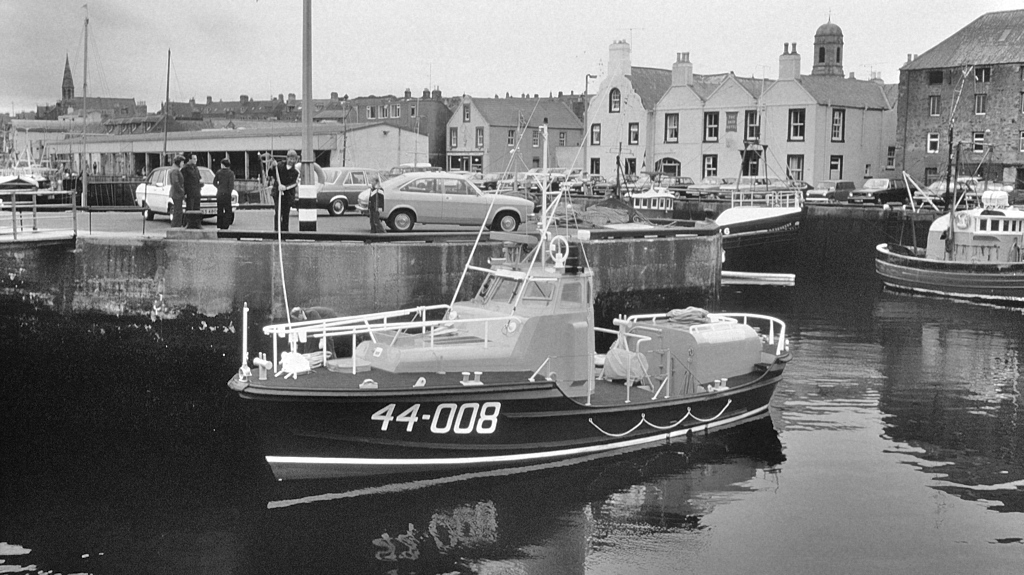
On the south side of the harbour, the lifeboat station houses the Trent-class HRH The Duke of Kent, on service since 1995 and due for replacement under the RNLI's fleet plan in 2028. The coxswain, Niall Wishart, is fifty-two and has served on the boat for twenty-one years.
The 2025 launch log for the Eyemouth boat shows nineteen calls, three of them in December. The longest was a four-hour escort of a Spanish freighter with engine trouble fifteen miles east-southeast of the harbour mouth. The most difficult was a single-person recovery from the Hurkur Rocks south of the town in a force-eight northeasterly on the second of December.
"The North Sea in December has its own personality," Wishart said. "The swell stacks up. You don't get the long Atlantic interval. It's a shorter, steeper sea, and that's what catches people out."
In the town proper, the midwinter rhythm is shaped by the fleet's hours. The first cafes open at five-thirty. The Giacopazzi family's chip shop on the harbour, which has been in the same family since 1899, opens at eleven and closes at eight, and serves a busy lunch trade of harbour workers and a smaller dinner trade of locals.
The Eyemouth Tavern on the Bantry serves a Sunday roast through the winter that fills the dining room and the public bar. The publican, Greta Macauslan, has been behind the bar since 1998. She keeps a small ledger of regular customers' usual orders, which she says is a courtesy and a tool. "People don't want to ask twice. The fishermen don't want to wait. The pensioners want what they had last week. The ledger saves time."
On the wall of the Tavern's snug there is a framed photograph from 1965 of the Eyemouth fleet under sail, taken from the harbour mouth on the morning of the herring drive. The herring fishery, which once defined the East Coast, ended at Eyemouth in 1969 with the collapse of the North Sea stocks. The boats in the photograph are all gone. Two of the families named on the back of the print are still on the harbour, in different boats, fishing different species.
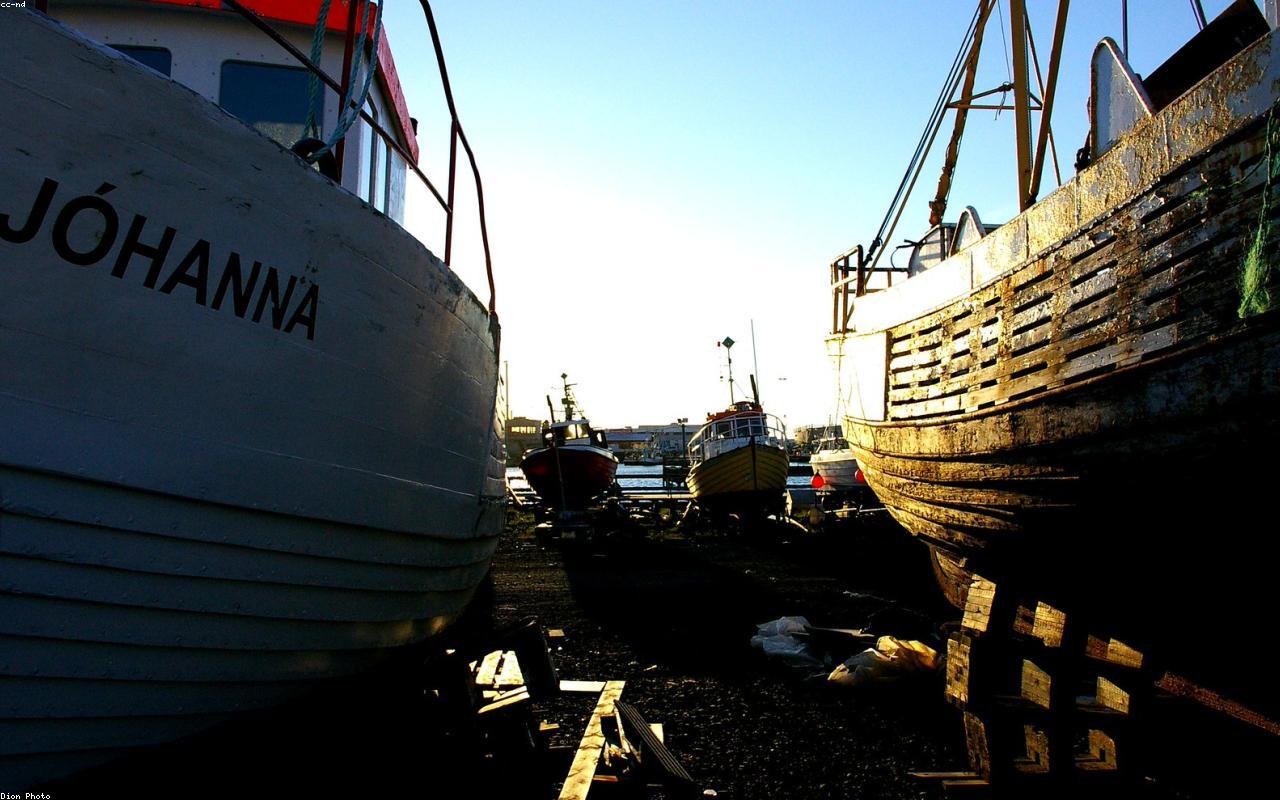
By four in the afternoon on the shortest day, the light over the harbour has gone. The harbour sodium lamps come on. The wind has dropped slightly but the rain is still horizontal. The boats are tied two and three deep at the inner basin. A handful of crews are still at work on deck, washing down, stacking gear. The sound of diesel and the smell of fish are the same as they were in 1881, and as they were yesterday, and as they will be tomorrow if the weather allows.