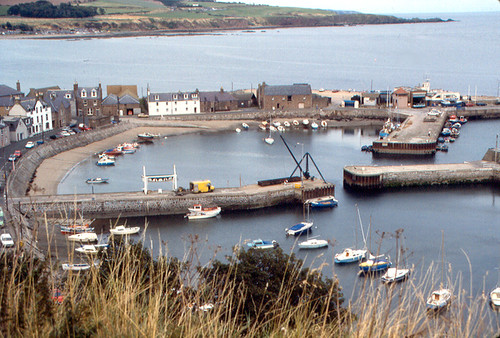
At first light on a Tuesday in March, the wind in Lubec comes off the Bay of Fundy with a salt that gets into wool. The harbour ice has gone out twice already this season and refrozen once. On the granite seawall behind the Mulholland Market, a sign painted in 1974 still reads R. J. Peacock Canning Co., although the building it points to has been a chandlery, a sea-glass gallery, and now a winter-shuttered cafe with one strand of lights still burning in the back window.
Lubec is the easternmost town in the contiguous United States. Its population in the 2020 census was 1,253. By the unofficial count kept by Bonnie Demarest at the post office, it is now closer to 1,090, although she allows that her ledger is imperfect.
The last sardine cannery in town, the Peacock plant down on Water Street, closed in 2001. The last sardine cannery in the United States, in Prospect Harbor an hour west, closed in April 2010. What people in Lubec call "the year after" is therefore a long year, going on twenty-five.
Charlotte Tinker has lived in the same yellow Cape on Pleasant Street since 1962. She worked the Peacock line from 1971 until the closing, packing brisling sardines in cottonseed oil at a rate she still remembers in tins per hour. She is seventy-eight and walks down to the wharf most mornings to look at the water.
"It wasn't the work," she said, sitting at her kitchen table over a mug of tea gone cold. "The work was hard. It was the building. The smell. The sound of the line. When that stops, the town goes quiet in a different way."
Lubec's quiet is its present tense. There is no traffic light. The town's largest employer is the school district. The second largest is the West Quoddy Head Light station, which since automation in 1988 has operated with two seasonal staff. The Lubec narrows, between the town and Campobello Island, have the second-highest tidal range in the western hemisphere, twenty-eight feet at spring tide.
The Roosevelt Campobello International Bridge, opened in 1962, carries about 220 vehicles a day in summer and fewer than thirty in winter. The Canadian customs station on the far side closes at six. After that, the bridge is technically open, but anyone crossing has to phone ahead.
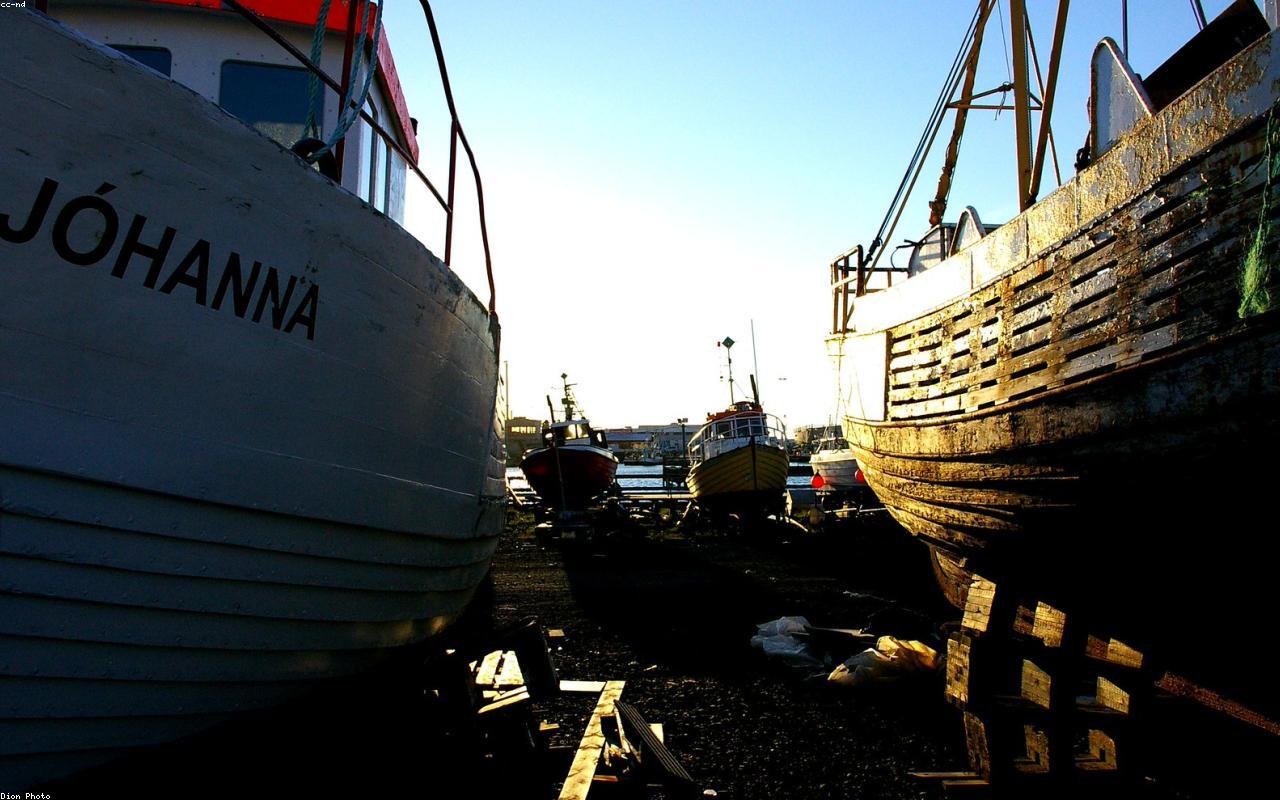
In the year following the Prospect Harbor closing, the Maine Department of Marine Resources counted seventeen working draggers operating out of Lubec. The current count, on the harbourmaster's clipboard, is four. Two of them are owned by the same family. One, the Mary Esther, was launched in 1971 and has been re-engined twice.
Captain Daryl Pike runs the Mary Esther with his nephew Wendell. They fish urchin and sea cucumber in season, scallops when the licence allows, and what Pike calls "the leftovers" the rest of the year. He is fifty-nine and has not had a season above 1995 prices in real terms since 2003.
"You hear about the lobstermen," Pike said, in the wheelhouse with the diesel idling. "The lobstermen are doing all right. We're not lobstermen. The bottom around here doesn't hold them the same."
The Lubec lobster co-op, on the south side of the harbour, ships through Stonington and Beals. Its membership in 2026 is eleven boats, down from thirty-one in 1998. The co-op manager, a soft-spoken woman named Pauline Boudreau who came from Cap-Pelé in 2009, keeps the books and the radio. She says the co-op will not close while she is there. She does not promise more than that.
In the absence of fish, Lubec has tried a few things. There is a smokehouse on the east side of the harbour that processes Atlantic salmon trucked in from the New Brunswick farms across the line. There is a small whole-bean coffee roastery in what used to be the Customs House. There is a community sailing programme that runs for six weeks in July out of the old Coast Guard boathouse.
None of this employs more than nine people. The smokehouse, the largest, runs a second shift only during the fall holiday rush.
What has changed is the housing. In the 2026 town assessor's roll, 38 percent of Lubec's housing stock is classified as seasonal. In 2010 the figure was 19 percent. The houses that go to the seasonal market do not go cheap. A two-bedroom on Water Street with a view of the harbour sold in November 2025 for $412,000, to a buyer from Brookline, Massachusetts, who plans to use it eight weeks a year.
At the Lubec Memorial Library on Water Street, the librarian Maddie Hoyt keeps a binder of newspaper clippings about the cannery years. The binder is three inches thick. The clippings end in 2004. There has not been a local paper in Lubec to clip from since the Quoddy Tides reduced to monthly that year.
Hoyt, who is thirty-four and moved back from Portland in 2021 to take the library job, says the binder is the single most-requested item in the library's local-history room. "People come in," she said. "They want to know what it was. Not the romance. They want to know if it was steady work, what it paid, whether the air was bad. They want to know what it actually was."
What it actually was, by the records Hoyt keeps and Tinker remembers, was about 480 line jobs at peak in the 1950s, between the Peacock plant and the smaller Booth Fisheries operation that closed in 1979. The wages in 1971, when Tinker started, were $1.86 an hour with no benefits. The work was seasonal, the line ran when the boats came in, and a packer who was fast could make a living.
By the end, in 2001, the wages were $7.40 an hour and there were 41 line jobs. The herring stock had moved north and east. The cottonseed oil came from out of state. The tin came from Pennsylvania. The market for canned sardines in the United States had been falling by roughly four percent a year since 1981, and nothing the plant could do was going to reverse that.
Outside the library, the wind has come around to the south and the ice on the harbour is moving again. A bald eagle works the air over the channel, then drops to the breakwater and gives up on whatever it saw. The tide is coming in.
What Lubec has, more than anything, is the tide. The water rises and falls twice a day, twenty-eight feet on a good moon, and the rhythm of it is the same as it was in 1971 and in 1862 and in the years before the town had a name in English. The fish came and went. The plants came and went. The tide is what stays.
Charlotte Tinker, when asked what she thought the town would look like in another ten years, did not answer for a while. Then she said: "I'll be eighty-eight. I don't know. But the wind will be the same. The wind here is the same."
Filed under