Patrick Myrick is seventy-three. He has tended the light at Cape Race, on the southeastern tip of the Avalon Peninsula in Newfoundland, since 1979.
His father, James Myrick, tended it before him from 1948 to 1979. His grandfather, William Myrick, tended it from 1909 to 1948. There has been a Myrick at Cape Race, with two short interruptions during the wars, for one hundred and seventeen years.
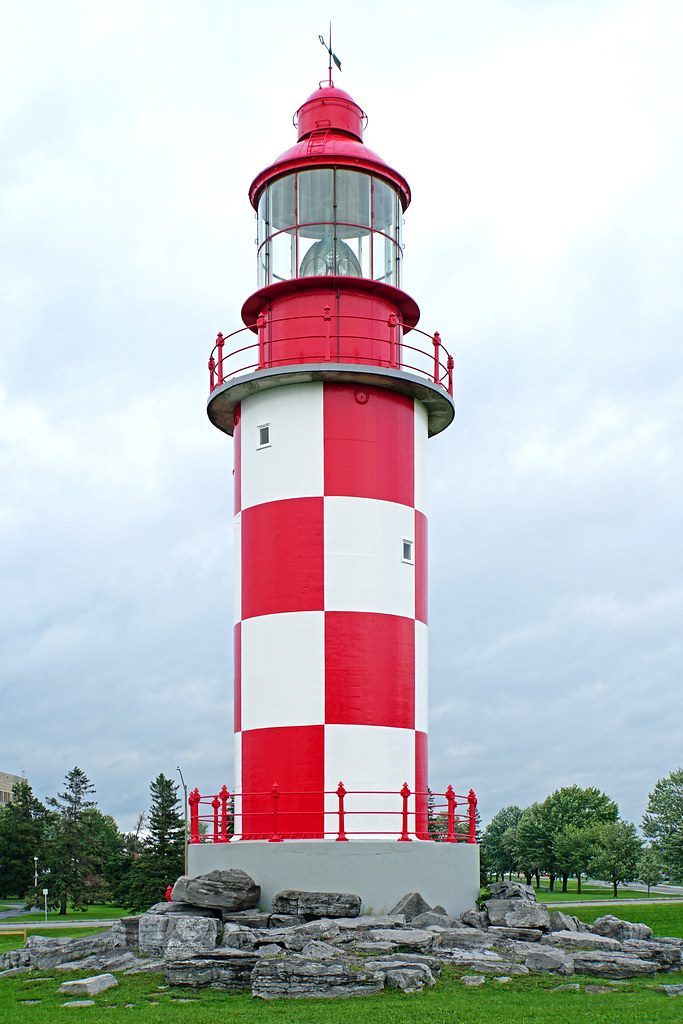
The current tower is a cylindrical cast-iron structure, ninety-six feet tall, painted white. It was built in 1907 to replace a wooden one. It carries a first-order hyperradiant Fresnel lens manufactured by Barbier, Bénard et Turenne of Paris in 1906 and shipped to Newfoundland aboard the SS Stella Maris in May of that year.
The lens is twelve feet tall and weighs roughly seven tons. It rotates on a bath of mercury, a vat about four feet across, which the Myricks have skimmed and topped up four times a year for the better part of a century.
The Canadian Coast Guard automated Cape Race in 1992. Most of the country's lighthouses had been automated by then; Cape Race was among the last on the Atlantic coast to retain a resident keeper.
But the Myricks did not leave. The Coast Guard reached an unusual arrangement with Patrick under which he remained on the station as a contracted observer, responsible for weather reporting, equipment monitoring, and the maintenance of the rotation mechanism, which the agency declined to convert to electric drive.
Cape Race has the highest measured fog frequency on the Atlantic coast of North America: roughly 158 days a year. The point is the first North American landfall for ships transiting the Great Circle route from Europe, and was the receiving station for the SS Titanic's distress signal on the night of April 14, 1912.
The Marconi wireless cabin in which the signal was received still stands, two hundred metres from the tower. It is now a national historic site.
Patrick Myrick lives in a four-room frame house adjoining the tower, with his wife, Bridget, and a black-and-white border collie named Maeve. The road in from Portugal Cove South is twelve kilometres of gravel.
His daily routine, by his own account, has not changed since the early 1980s. He rises at 05:00, takes the barometer reading, checks the lamp, walks the perimeter of the keeper's enclosure, and writes the previous night's observations into a hardcover record book.
He has filled forty-seven such books since 1979. They are stacked in a wooden bookcase in the keeper's office on the ground floor of the tower. The earliest, from 1909, is in his grandfather's hand and is kept in a fireproof box.
The fog signal at Cape Race is a diaphone of the type designed by Frederick Newcombe at the turn of the twentieth century. It sounds a two-tone blast, low and lower, every sixty seconds in fog, audible at sea in still air for nine to twelve nautical miles depending on humidity and wind.
The diaphone has been disconnected from automatic operation since 2004. Patrick activates it manually when he judges visibility to have fallen below two nautical miles.
He does not use an instrument for this judgement. He stands on the gallery walk around the lens room, looks east, and decides.
The lens itself is the great object of his attention. He polishes its 1,176 prisms once a year, beginning in the second week of May and finishing in the third week of June. He uses chamois cloth, a mixture of distilled water and ethanol, and a small natural-bristle brush he inherited from his father in 1979.
The clockwork mechanism that drives the lens was made by Chance Brothers of Birmingham. It is a falling-weight system: a cylindrical weight of about eighty kilograms descends through a brick-lined shaft in the tower over a period of roughly four hours, driving the rotation through a train of brass gears.
Patrick winds the mechanism by hand every four hours, day and night, when the light is in operation. There are five hundred and ninety winds, give or take, in a year.
He does not consider this a hardship. He told this magazine, on a Thursday afternoon in May 2026, that he had grown into the rhythm so completely that he woke at the correct intervals without an alarm.
The Coast Guard arrangement under which Patrick maintains his role expires on December 31, 2027, when he turns seventy-five. The agency has not yet announced whether it will renew or terminate the contract.
If it terminates, the mercury vat will be drained, the clockwork will be retired in place, and the rotation will be driven by an electric motor installed in the lower gallery. The first-order Fresnel will continue to operate. The light will continue to flash.
Patrick has not said publicly what he intends to do. He has a daughter, Eileen, who is forty-six and works as a marine biologist in St. John's. She has visited the station regularly since her childhood and is, in Patrick's word, capable.
Whether Eileen would take on the role, and whether the Coast Guard would permit her to, is a matter the family does not discuss with visitors. Patrick poured the magazine a cup of strong tea, walked it to the tower's south gallery, and pointed out a freighter eight miles offshore.
It was nine in the evening. The light, in clear weather, was rotating quietly. The lens caught the low northern sun and threw a thin band of broken color across the gravel road. Patrick wound the weight.