The horn sounds for four seconds, falls silent for fifty-six, and has done so without interruption since the second week of April. It is now May.
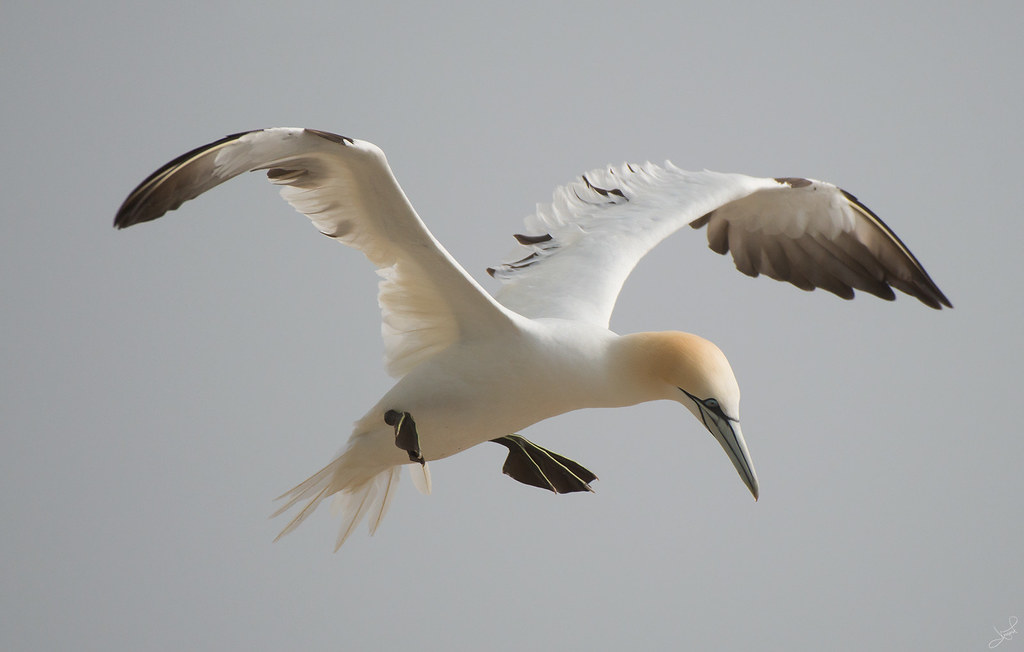
Cape St. Mary's, on the southwestern tip of the Avalon Peninsula in Newfoundland, is best known to ornithologists for its gannet colony. Roughly 24,000 northern gannets nest on Bird Rock, a flat-topped sea stack about thirty metres offshore.
But the point also carries a small lighthouse, a fog signal, and a Provincial Park headquarters that opens for the summer on the first Friday in May.
On the morning of May 3, 2026, the magazine arrived at the station at 03:50 with the staff biologist, Helen Coombes. The fog was thick enough that the rental car's headlights produced a useful range of perhaps eight metres.
Coombes, who has worked at the cape since 2011, drove. The road was empty.
At 04:00, while Coombes unlocked the gate to the interpretation centre, the foghorn at the station sounded for the first time this morning.
It is a low note, two-tone, the lower tone coming half a second behind the higher. It is the unmistakable sound of a Newcombe-pattern diaphone, the same design as at Cape Race, though the Cape St. Mary's installation dates from 1968 and is technically a Diaphone-Type F.
The horn is loud at the foghorn itself, painfully so, and walking is not advised within a hundred metres without ear protection. At the interpretation centre, six hundred metres back from the cliff, the sound arrives as a low pressure in the chest more than as a noise in the ears.
Coombes made coffee in the centre's small staff kitchen. The propane stove ticked. Outside, the gannets, audible despite the fog, kept up their continuous low quarrelling.
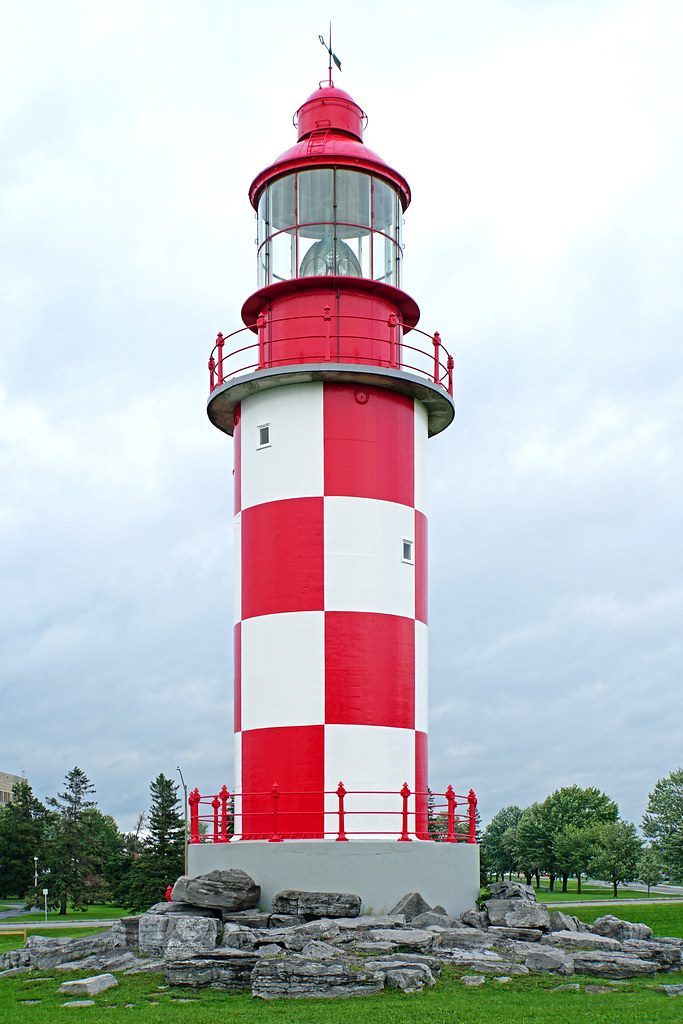
The lighthouse at Cape St. Mary's is small: a square white tower forty-one feet tall, attached to the keeper's house, which is no longer occupied. The light itself is solid-state, on a five-second flash, and was last serviced in October 2025.
The horn, though, is the local instrument. Fog at Cape St. Mary's is frequent enough through April and May that the horn runs for days at a stretch. Coombes told the magazine that her record continuous activation was eleven days in May 2018.
She walked the magazine out toward the cliff edge at 04:30. The gannets, she said, are not bothered by the horn. They have nested on Bird Rock since at least 1883 in numbers exceeding ten thousand pairs, and the horn has been a fixture of their season for fifty-eight of those years.
The path from the centre to the seabird viewing area is six hundred and seventy metres, marked by short wooden posts. In fog, the posts disappear at about four metres and you walk from one to the next.
Coombes did not need the posts. She has walked the route, she estimated, on the order of three thousand times.
Halfway out, the smell of the colony reaches you. It is sharp and ammoniacal and unmistakable. The horn sounded again. From the cliff, you could not see the foghorn building behind you and you could not see Bird Rock ahead.
But the gannets were audible at perhaps thirty metres. The cliff edge was somewhere ten metres further on. Coombes stopped and indicated, with a hand at the small of the magazine's back, that the magazine should also stop.
She switched on a heavy red-filtered headlamp. The fog ahead lit up as a wall of slow moving cloud. Through it, fragments of white gannet shape resolved and disappeared.
Then the wind shifted, lightly, and the fog tore open for perhaps six seconds. Bird Rock appeared, top and sides white with birds, the gannets shifting on their nests like a coat of moving feathers. Then the fog closed again.
Coombes turned off the lamp. The horn sounded for four seconds, fell silent for fifty-six, and sounded again.
The two of them walked back to the interpretation centre in silence. The fog held. The horn continued.
By 06:30 the eastern sky was a paler grey and the gannets' calls were louder than the horn. The first vehicle of the day came up the road at 09:14, a parks-service pickup with two volunteers and a chainsaw, here to clear a windfall from the parking area.
The fog began to lift at 11:20. The horn fell silent at 11:36. The interpretation centre opened to the public, twelve visitors that day, at noon.
Coombes wrote the morning's data in the station log: temperature, wind, visibility, horn-hours, observed gannet activity. She closed the book, returned it to the shelf, and went out to clean the public restrooms before the afternoon ferry from St. John's arrived.