The tender out of Le Verdon-sur-Mer leaves at low water, an hour and twenty minutes before the lighthouse is accessible on foot across the sandbank.
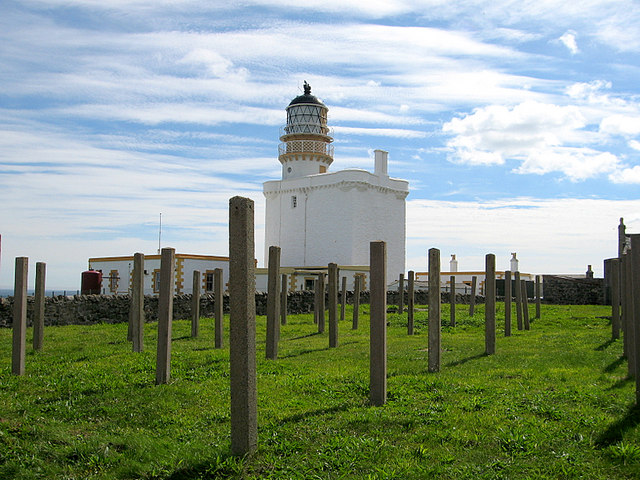
Cordouan stands seven kilometres offshore from the mouth of the Gironde estuary on the Atlantic coast of France. It is two hundred and three feet tall, constructed of dressed limestone, and has been in continuous service since 1611.
It is, by most accountings, the oldest active lighthouse in France. It was added to the UNESCO World Heritage list in July 2021.
Cordouan is one of the few lighthouses in the world still staffed by resident keepers. There are four of them, working in pairs on alternating two-week rotations. On the morning of the magazine's visit, May 26, 2026, the duty pair were Étienne Marchal, sixty-two, and Hugo Pelletier, thirty-four.
Marchal has been at Cordouan since 1989. Pelletier began in 2019. They have worked together as a pair since 2021.
The tower sits on a small artificial platform of dressed stone surrounding the natural sandbank on which it was founded. At extreme low tide the bank emerges and is walkable from the tender's anchorage in roughly twenty minutes. At extreme high tide the platform itself is submerged to a depth of two metres, with only the tower above water.
The magazine and a small group of visitors crossed the bank at 11:40 on a moderate spring tide. The water at the deepest point was about thirty centimetres, the sand firm. The crossing was made in rubber boots.
Cordouan has the structure of a stacked classical monument. The lower storey is a Doric chapel; above it is a Renaissance king's apartment; above that, a series of smaller rooms; and at the top, the lantern room and its current first-order Fresnel.
The chapel is consecrated, in a manner the magazine could not entirely parse. There is no priest in residence, but it is occasionally used for marriages and baptisms by special arrangement with the Diocese of Bordeaux.
The king's apartment, the second storey, was added in 1611 in anticipation of a possible visit from Louis XIII, who never came. It is panelled in oak, with a marble floor and four small windows looking east toward the estuary.
Marchal led the climb. The stair is wide at the lower storeys and narrows as it rises. The total number of steps from the entry door to the lantern gallery is three hundred and one.
The lantern at Cordouan is currently a first-order Fresnel installed in 1948, replacing an earlier nineteenth-century optical assembly that was damaged during the German occupation of the estuary and removed in 1944.
The 1948 lens was manufactured by Sautter-Harlé of Paris and is one of the last large Fresnels built in France before the firm discontinued lighthouse-glass production in 1956. It rotates on a mercury bath, driven by an electric motor since 1971.
The light's character is one white flash every twelve seconds. Range is twenty-two nautical miles in clear weather.
Pelletier showed the magazine the duty room, two floors below the lantern. It contains a small kitchen, two narrow bunks, a desk with the duty log, and a wood-burning stove for which the keepers cut driftwood collected at low tide from the surrounding bank.
The keepers' routine is structured by the tide more than by the clock. At high water there is no access on or off the tower, except by the small motor launch tied at the platform stair, and most maintenance work is done in the morning and evening shoulders.
The midday hours, when visitors arrive and depart, are taken up with guided tours. The keepers conduct these themselves; the tower can be visited by groups of up to fifty by appointment from April through October.
Marchal has, by his own count, given roughly twelve thousand tours. He still seems to enjoy them. He pointed out the king's apartment ceiling, painted in 1855 with a small allegory of the lighthouse keeper's profession, and gave the magazine a sentence in Latin he said was the apartment's motto.
The magazine did not quite catch the Latin. Pelletier, when asked later in French, translated it as I keep watch so that you may sleep, which is perhaps too clean a rendering.
The tide turned at 14:48 that afternoon. The sandbank, exposed for roughly five hours, was submerged again by 17:30. The tender returned at 16:20 to collect the visitors.
Marchal and Pelletier saw the tender off from the platform stair. The wind was light. The estuary, brown with sediment, ran out to sea past the tower at a steady three knots.
Their two-week rotation ended on June 4. The relief pair, Marchal told the magazine by telephone the following week, arrived on schedule. He spent the next two weeks at his house in Bordeaux. He read three books and did some gardening. He returned to the tower on June 19. He expects to do this, with no clear intention of stopping, for another three years.