The Karlskrona Sailing Society meets on Tuesday evenings through the spring at a wooden clubhouse on the south side of the harbour. The society has existed since 1872 and currently has eighty-one members, most of them retired naval officers or their children.
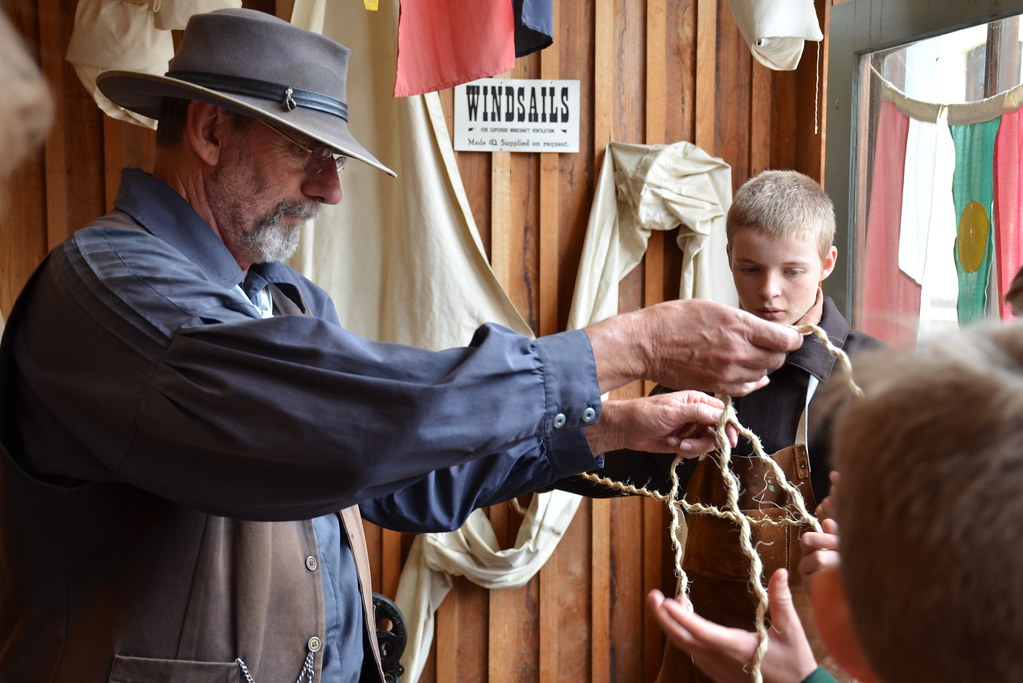
Per Lindgren agreed in March to teach a short course on practical ropework. Four members enrolled. They met on three Tuesday evenings in late May and early June.
The third evening was given over to a single knot, the rolling hitch. Lindgren considers it one of the most useful and most poorly taught knots in the small-craft repertoire.
The rolling hitch is a hitch tied around another rope or a spar, designed to hold under tension along the axis of the supporting member. It will hold a tensioned line pulling lengthwise along a smooth post.
Few other knots will do this. A clove hitch slips lengthwise along a spar. A round turn with two half-hitches works only for tensions perpendicular to the spar. The bowline does not address the situation at all.
The rolling hitch is what an everyday boater uses to take the load off a jammed sheet so the original turn around the winch can be cleared. It is what one uses to attach a snubber directly to a chain. It is what holds a fender lanyard to a vertical stanchion when the lanyard is loaded downward.
Lindgren demonstrated the knot first slowly. The working end is led twice around the supporting member, both turns laid on the side of the rope from which the load will come, then crossed over the standing part and led once more around the supporting member on the far side, finished with a tucked half-hitch.
The two turns on the loaded side provide the friction. The far-side turn locks the knot.
He tied the knot in roughly five seconds. It looked simple. The class watched.
Then he asked each student to tie one, using a length of nine-millimetre polyester around a vertical wooden post the size of a small mast.
The first student, a retired submariner named Lennart Sjöberg, tied two turns on the wrong side of the standing part. His hitch would have slipped immediately under load. Lindgren showed him the error and let him try again.
The second student, a woman named Birgitta Ahnberg who had crewed dinghies in her twenties, made the same error.
The third student, a younger man named Anton Larsson, tied only one turn on the loaded side instead of two. His hitch would have slipped under heavy load though it might have held under light load.
The fourth, an architect named Mårten Ek who had read about the knot in a book the night before, tied it correctly on the first attempt. Lindgren congratulated him without effusion.
The point of the exercise, Lindgren told them, was not that the knot is difficult. The point is that the knot's behaviour depends on the direction of load and the side on which the turns are placed.
A rolling hitch tied on the wrong side of the standing part is not a rolling hitch. It is an ineffective clove hitch with an extra wrap. It will fail.
He had each of the three repeat the knot, slowly, with explicit attention to the side of the standing part on which the load would come. After two or three repetitions each, they could tie the knot reliably.
He then loaded each knot. He tied the supporting post horizontal, threaded the standing part over a pulley, and hung a twelve-kilogram dive weight from it. Three of the four rolling hitches held without slipping.
Sjöberg's hitch slipped twice. The third time Lindgren watched him tie it, identified that Sjöberg was still favouring the wrong side from habit, and corrected him by hand. The fourth attempt held.
The class ended at half past nine. Lindgren walked home through the long Scandinavian twilight, satisfied with the evening.
He has taught the rolling hitch perhaps a hundred times over the years. In his experience, roughly half of new students tie it on the wrong side initially. The error is not corrected unless it is identified and named.
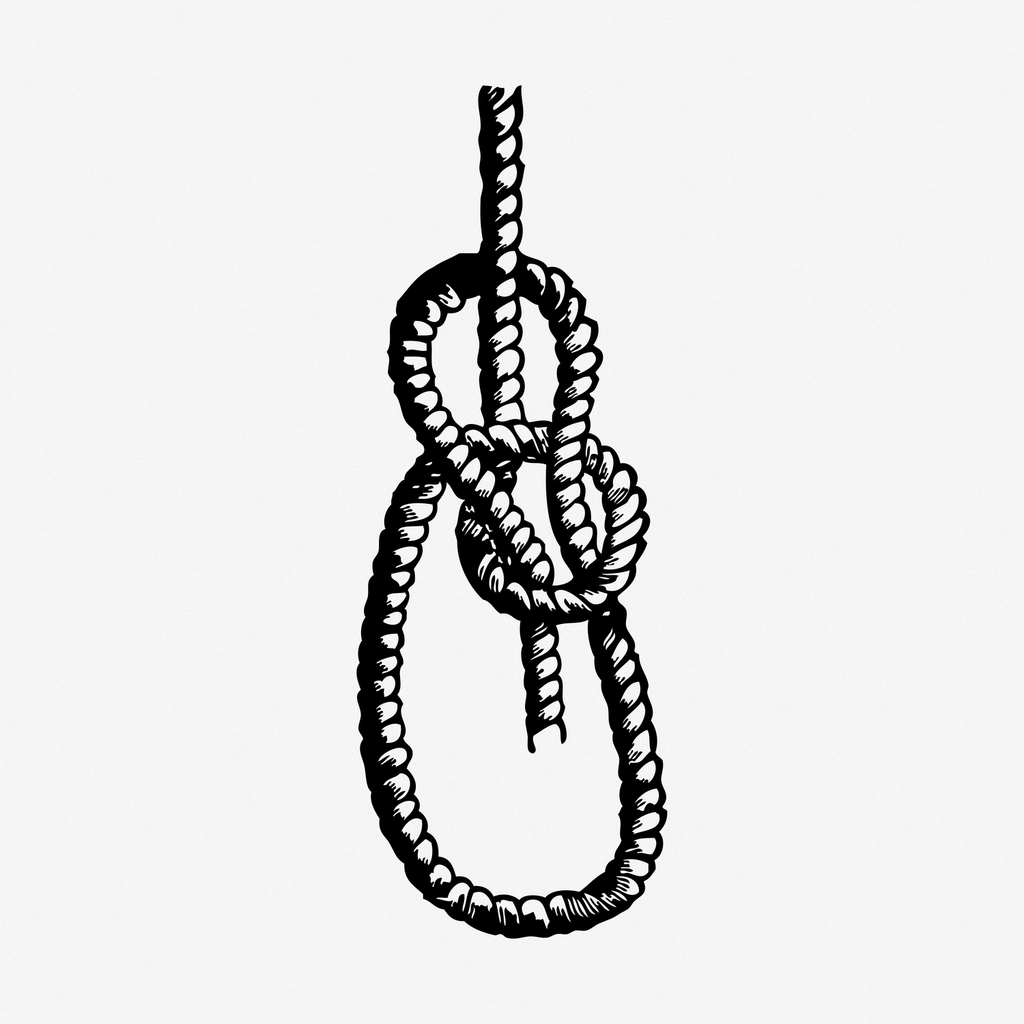
Boating literature is partly to blame. Many published diagrams of the rolling hitch show the knot from an angle that does not make the loaded side obvious. A student who learns from a book may form the wrong mental model and reproduce it for years before discovering the error in the field.
Lindgren teaches it, when he can, with a vertical post and a clearly visible load. The student watches the knot grip when correctly tied and slip when incorrectly tied. The lesson is learned through the hands, not the diagram.
It is, he thinks, the way most useful knowledge gets transferred. A book can describe the rolling hitch. It cannot teach it.
For that, he says, you need a post, a rope, a weight, and someone willing to watch you fail twice before you succeed.
Filed under