The fjord at Aurland, an inlet off the larger Sognefjord on the west coast of Norway, is deep, narrow, and prone to katabatic winds in summer evenings. A boat anchored there must be well anchored.
Reidar Vik spent the first weekend of May aboard a thirty-two-foot Hallberg-Rassy named Skarvøy, owned by a colleague from his Bergen shipping office. The colleague had asked him to look over the boat's anchor system before a summer cruise to the Faroes.
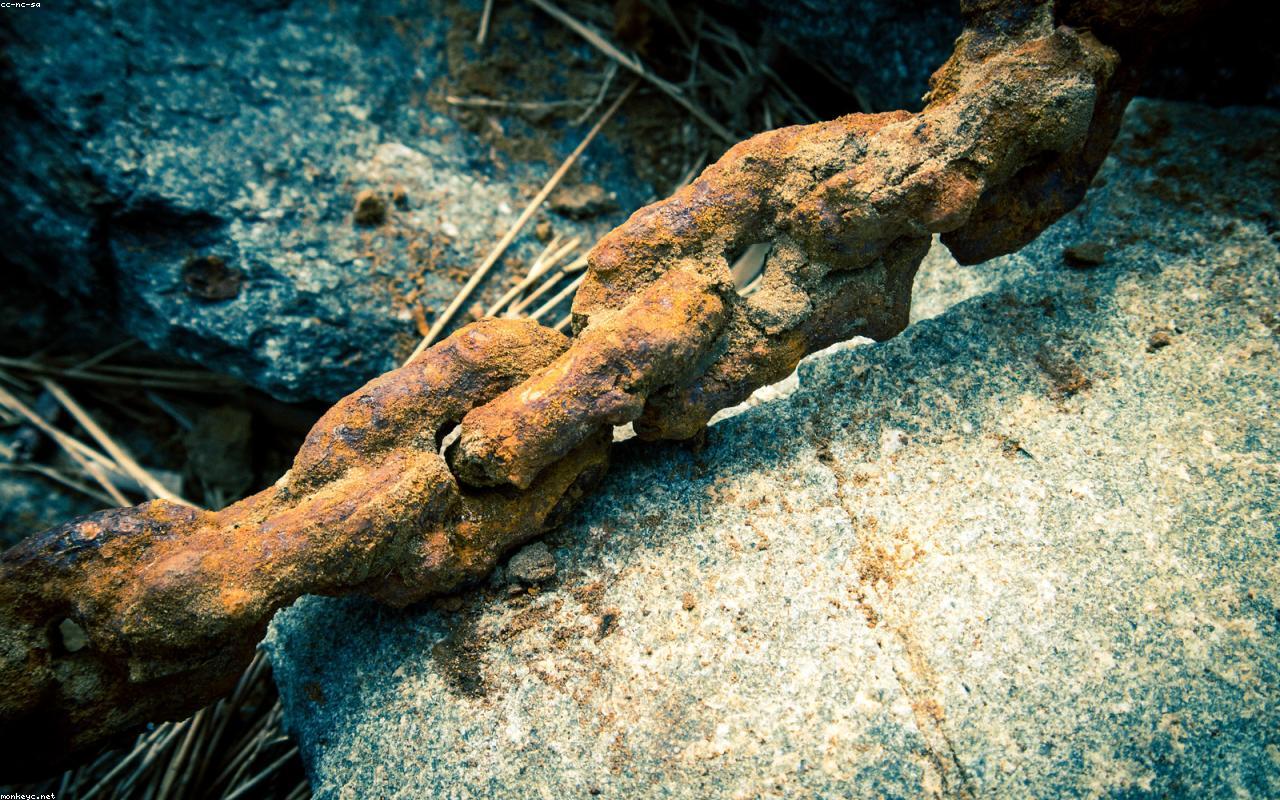
The ground tackle was, by ordinary measures, generous. A twenty-kilogram Rocna anchor on the bow. Sixty metres of ten-millimetre galvanised chain, eight years old but well maintained. A windlass that worked.
Vik examined the chain locker, the bow roller, the chain itself, the anchor's shank, the swivel between anchor and chain. All in order.
What was missing was a proper snubber.
A snubber, in the vocabulary of anchoring, is a length of nylon rope deployed between the chain and a deck cleat, intended to absorb the shock of wind gusts and wave action that would otherwise transmit directly through the chain to the bow.
Without a snubber, every gust loads the chain, which loads the anchor, which loads the seabed. The anchor's hold is degraded incrementally with each shock. In a strong blow it can be broken out altogether.
With a snubber, the gusts are absorbed by the elasticity of the nylon. The chain hangs loose between the snubber attachment point and the bow. The anchor is loaded steadily, not shocked, and holds.
Skarvøy's owner had been using a length of eight-millimetre polyester braid, attached to the chain with a chain hook, as a snubber. Polyester braid does not stretch. The system was, functionally, a piece of decoration.
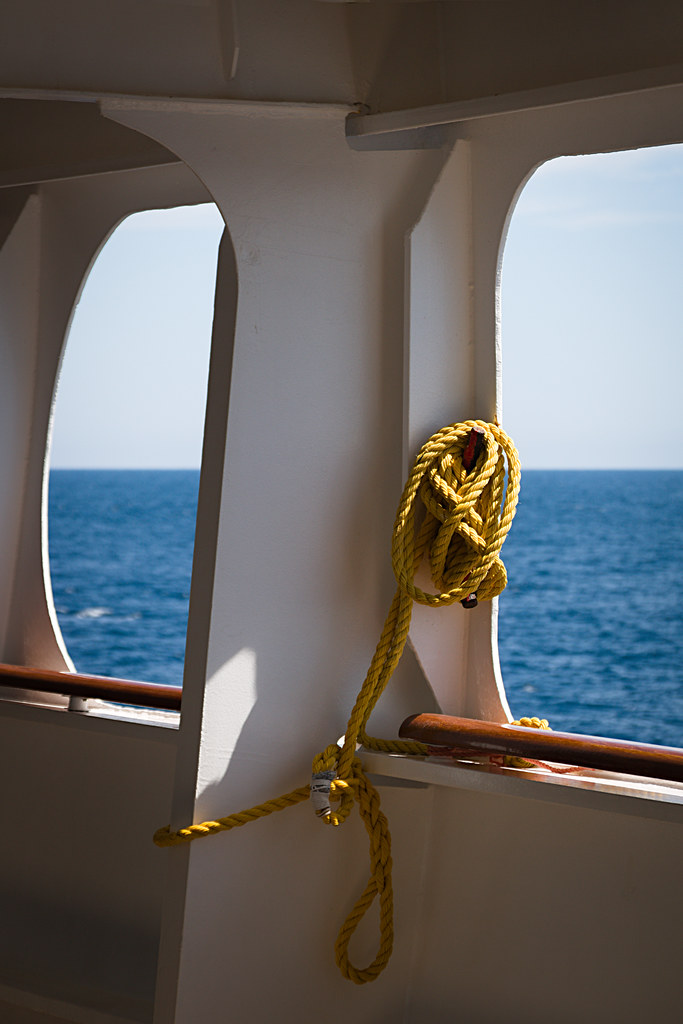
Vik replaced it that afternoon with a length of twelve-millimetre three-strand nylon, six metres long, finished at one end with an eye splice over a stainless thimble and at the other with a soft eye intended to be hitched to a deck cleat.
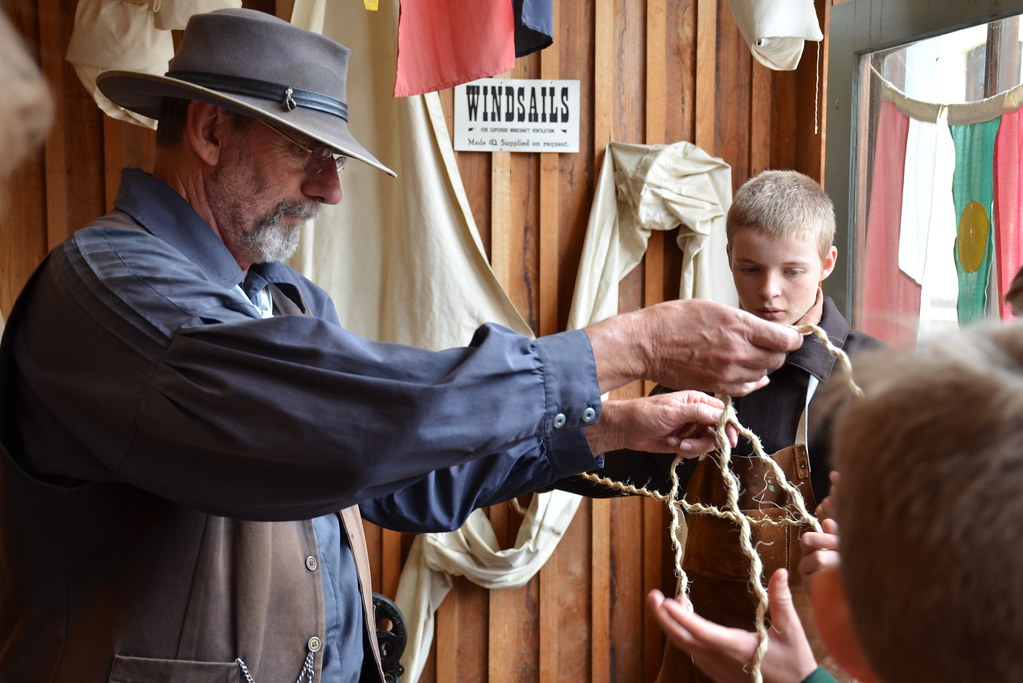
He attached the snubber to the chain not with a hook but with a rolling hitch, tied directly in the nylon around a single chain link. The rolling hitch holds securely under steady load and releases with a few seconds of work.
He preferred this to the chain hook because hooks can disengage if the chain goes slack, which happens when the boat surges forward in a wind shift. A rolling hitch does not disengage.
He deployed the system that evening. The boat lay to her anchor in a fifteen-knot breeze that increased to twenty-five by midnight. The chain between the snubber and the bow roller hung in a relaxed catenary, occasionally lifting and slackening as the boat moved.
The snubber itself stretched visibly with each gust, perhaps fifteen centimetres, and recovered between gusts. The boat held station within a circle of perhaps four metres' diameter all night.
Without the snubber, Vik observed, the boat would have jerked at the end of each chain pull, fetched up hard against the load, and transmitted that shock to the anchor. It would probably still have held in this particular seabed, which was thick mud, but the margin of safety would have been narrower.
He explained all this to Skarvøy's owner over breakfast the next morning.
The diameter of the snubber matters. Too thin, and it works as a shock absorber but breaks under extreme load. Too thick, and it is stiff enough that it does not stretch usefully.
Vik recommends nylon roughly equal in diameter to twice the chain's diameter. A ten-millimetre chain calls for a snubber of perhaps twelve to fourteen millimetres. A thirteen-millimetre chain wants sixteen.
The length is also significant. Too short, and the snubber bottoms out, transmitting shock to the chain. Too long, and it loops awkwardly and chafes on the bow roller.
Six to eight metres is the working range for most cruising yachts. Vik's preferred length is six.
Chafe is the other consideration. The snubber passes over the bow roller, which is usually a hard plastic or stainless cylinder. Under load the nylon moves slightly as the boat works on her ground tackle, and over time this motion wears through the rope.
The solution is a length of leather, fire hose, or thick canvas sewn around the snubber at the point of contact. Vik carries a square of split leather in his ship's bag for exactly this purpose. He had to install one on Skarvøy as well, since the owner had none.
The cost of the entire snubber upgrade, including the leather chafe guard and the rolling hitch instruction, was perhaps fifteen euros. The peace of mind, when anchored in a deepwater fjord with a hard onshore wind, was incalculable.
Vik did not phrase it that way. He simply noted, in his column the following month, that of all the components of a cruising boat's ground tackle, the snubber is the one most often overlooked and the easiest to fix.