Per Lindgren keeps a length of nine-millimetre polyester in the drawer beside the bread knife. It is two metres long, white with a single blue tracer, and the bitter end has been whipped with waxed sailmaker's twine the colour of old wheat.
He learned the bowline at twelve, on a wooden Optimist dinghy in the Hanö Bight in 1971, from a sailing instructor named Karl-Erik Norén who refused to explain it more than once.
Fifty-five years later he ties the knot, on average, four times a week. Almost none of those occasions take place on a boat.
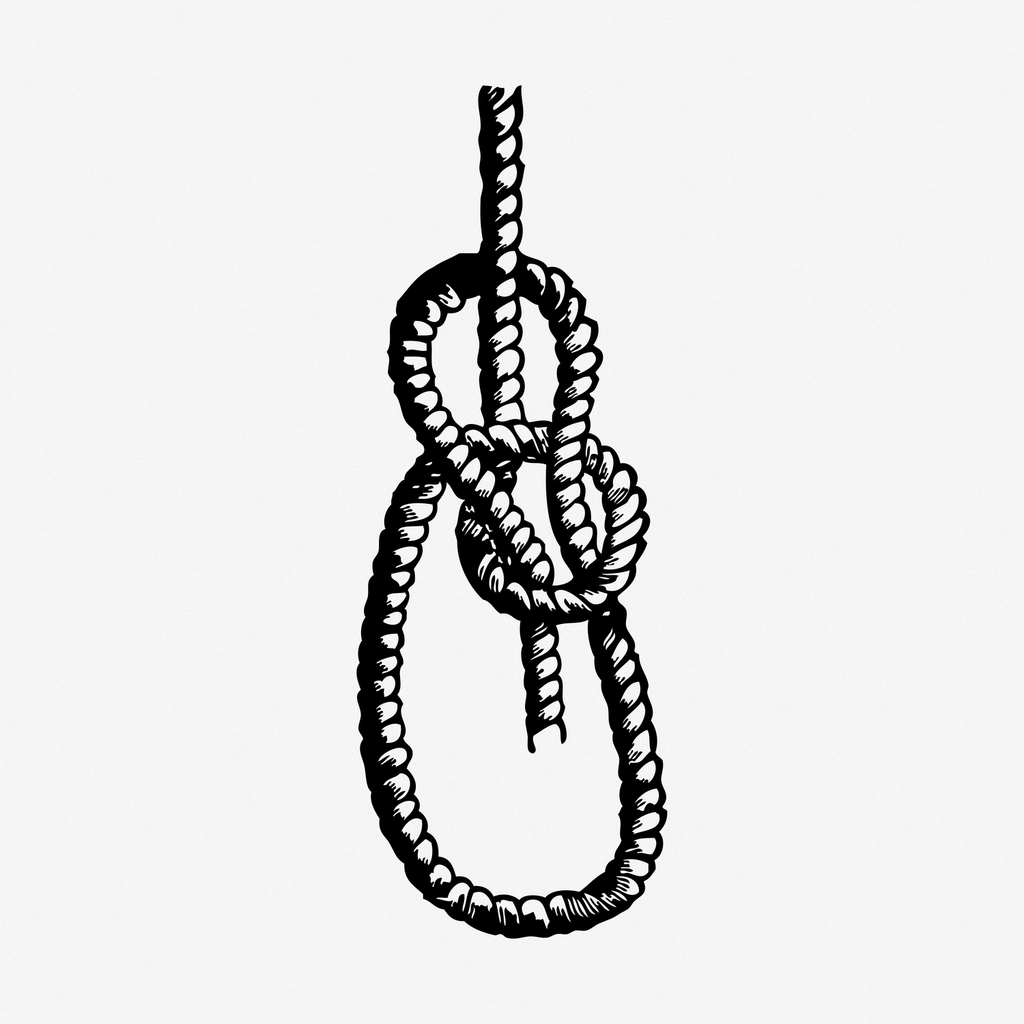
The bowline forms a fixed loop that does not slip under load and unties readily after the load is released. Those two properties, in combination, are unusual.
Most knots do one of the two things. The clove hitch holds and releases easily, but it works loose under cyclic load. The figure-eight on a bight does not work loose, but after a fall on it a climber may need a marlinspike to free the rope.
The bowline sits between them. It is a rigging knot at heart, used historically to secure a sail's clew to the bowline bridle so the windward edge of a square sail could be held taut against the wind.
The name dates at least to the fifteenth century. The knot is older.
Lindgren uses it to hang a fan from a rafter in his summer house at Torhamn. He uses it to lash a Christmas tree to the roof of a Volvo V70 every December. He uses it, in a thin nylon cord, to suspend a small linen bag of dried herbs from a hook above the stove.
He has used it once to secure a friend's broken arm in a sling, on a beach south of Karlskrona in August 2019, while waiting forty-two minutes for an ambulance.
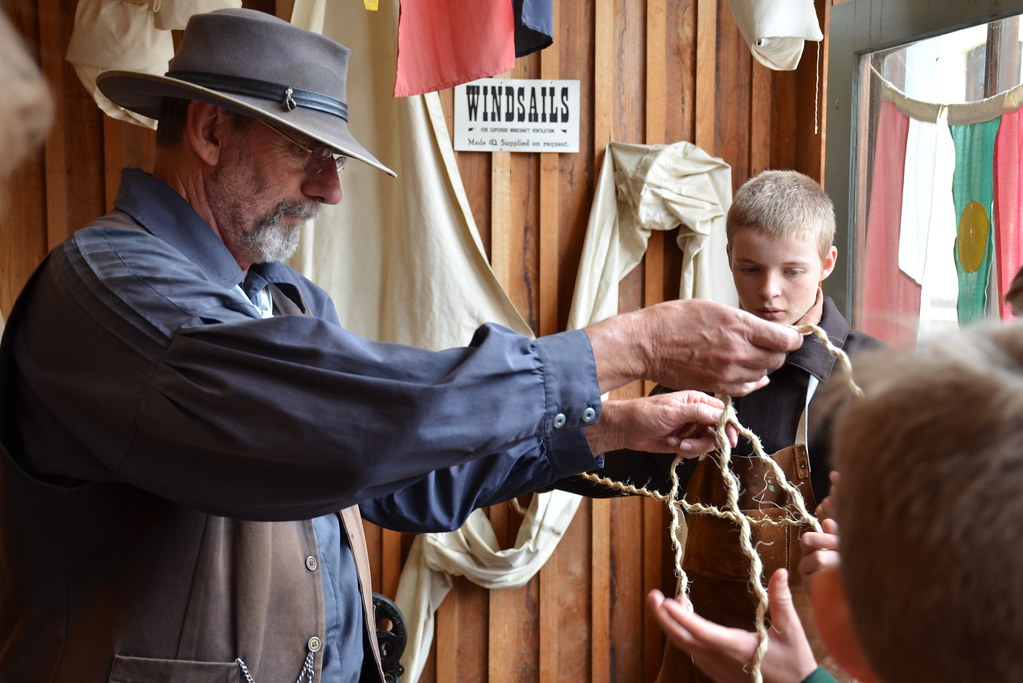
The knot is taught as a sequence of motions. The rabbit comes out of the hole, around the tree, and back down the hole. Generations of Scandinavian schoolchildren have learned it from a mnemonic, sometimes a sheep, sometimes a snake.
Lindgren is suspicious of the mnemonic. He thinks it teaches the gesture without the principle.
The principle is that a small loop is formed in the standing part of the rope, with the working end passed up through the loop, around the standing part, and back down through the loop. The friction of the working end being held against itself by the loop is what makes the bowline hold.
Understand that, he says, and you can tie one in the dark, with cold hands, with the rope behind your back. He has done all three.
There are variants. The Yosemite bowline finishes with the working end tucked back through the loop, a refinement developed by climbers in the 1970s to keep the knot from shaking loose when the rope is unweighted but moving. The double bowline doubles the initial loop, useful in stiff rope.
Lindgren ties the traditional form. He does not use a Yosemite finish at home because there is nothing at home that shakes hard enough to require one.
The rope itself matters less than people think, provided it is not slick polypropylene. Lindgren keeps three diameters under the sink. Three-millimetre nylon for hanging things light. Six-millimetre polyester for the garden. The nine-millimetre, which lives in the kitchen drawer, for everything else.
He replaces them roughly every five years. Sunlight is the killer. A rope kept indoors and out of strong window light will outlast its owner.
His daughter, Annika, who lives in Malmö and works as a paediatric nurse, ties bowlines too. She learned from him at nine. She uses them mostly to lash bags of recyclables to a bicycle trailer.
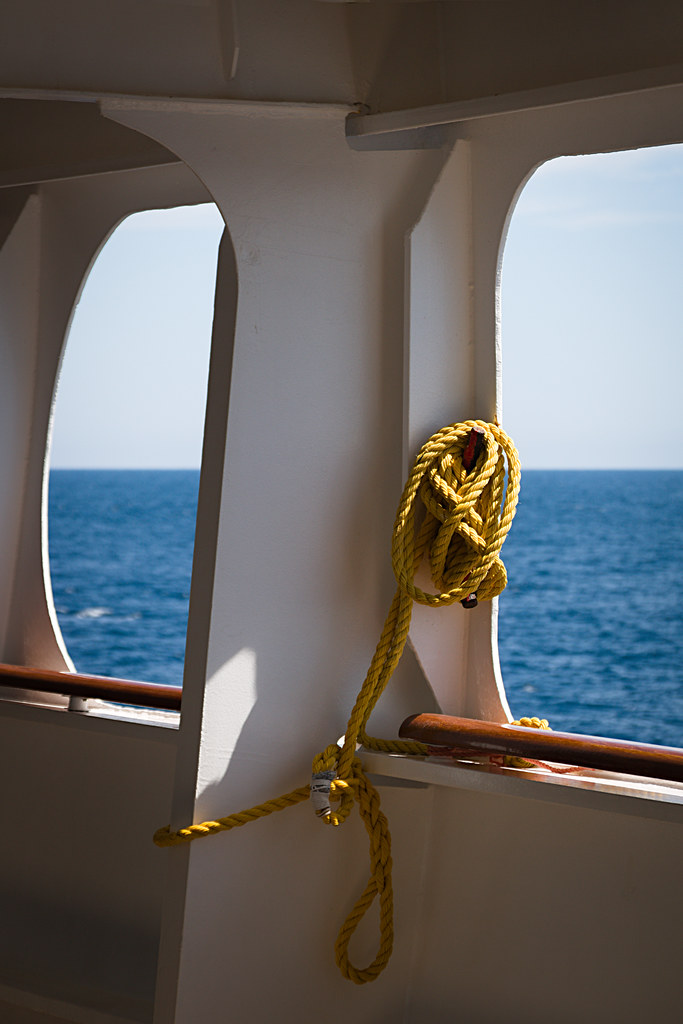
Once, last spring, she tied a bowline around the ankle of a deer that had broken through the ice of a pond near Lund, and three neighbours pulled it out. The deer lived. The rope, a yellow eight-millimetre static line that had previously belonged to a window cleaner, was returned to her in good condition.
Lindgren tells this story without elaboration. He thinks the deer is incidental to the knot.
The knot, in his view, is one of perhaps a dozen tools any household ought to keep in working order. Like a sharp knife or a sound flashlight, it is not impressive until it is needed, at which point it is the difference between coping and not coping.
He recommends learning four knots and learning them properly. The bowline, the clove hitch, the round turn with two half-hitches, and the figure-eight stopper.
Anything beyond that, he says, is hobbyism. He says this without judgement. He has hobbies of his own.
Filed under