The workshop sits at the back of an old net-loft on Strand Street in Dingle, behind a fishmonger called Coillte na Mara. Niamh O'Halloran inherited it from her uncle Pádraig in 2009 and has done most of her writing here ever since.
On the bench in front of her this morning is a fid of polished brass, a length of pre-stretched Dyneema in fluorescent green, a fine sailmaker's needle, a roll of waxed twine in dark blue, and a sharp pair of cordage shears.
The job is a Brummel locked splice, which is the standard finish for a soft eye in single-braid Dyneema. It will hold close to one hundred per cent of the rope's breaking strength when correctly executed, which is to say better than any knot.
She begins by measuring. The fid length, in Dyneema work, is a unit of measure equal to the length of the brass fid she uses, which is twenty-one centimetres.
She marks the rope at one fid length from the working end, then at three fid lengths, then at five.
Single-braid Dyneema is hollow. The strength of the splice comes from the rope being passed through itself, then locked by passing it back through again. The friction of the buried tail under load is what holds.
The first pass uses the fid as a needle. She tapers the working end of the rope by hand, milking the cover so that the last ten centimetres flatten and thin, then loads the rope onto the fid and pushes it through the standing part at the marked entry point.
The fid emerges three fid-lengths along. She pulls the working end through until the soft eye is the correct size, in this case roughly twelve centimetres of inside loop, intended for a stainless thimble that sits beside her on the bench.
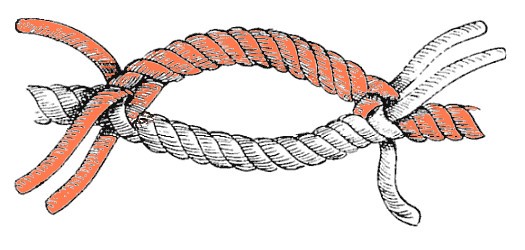
The second pass is the lock. She brings the working end back, threads it through the standing part again at a perpendicular angle, which creates the characteristic Brummel cross.
The locking step is what distinguishes a true Brummel from a simpler buried splice. It is what keeps the splice secure when the rope is unloaded and being shaken by wind or wave action.
Without the lock, a splice in slick Dyneema can creep open under cyclic stress. She has seen this happen on a thirty-four-foot Beneteau in a winter berth at Fenit, the soft eye on a halyard slowly working open over six weeks until the headsail came down.
The owner blamed the rope. The rope was not at fault.
After the lock she buries the tapered tail back inside the standing part, working it down with the fid until the tail disappears into the hollow weave. A correctly buried tail leaves no visible bump.
She finishes with a hand-whip in dark blue waxed twine at the throat of the splice, where the rope re-emerges from itself. The whip is not structurally necessary on a Brummel but it is traditional and it pleases her.
Twenty-two minutes from the first measurement to the final whip. She has been splicing braided line, in one form or another, since she was sixteen, and she finds the work meditative.
Her uncle Pádraig, who fished cod and pollock out of Ventry Harbour until a heart attack ended his career in 1998, used to splice three-strand manila by feel in the dark hold of his half-decker.
He taught her the three-strand splice first, the older form, where the unlaid strands are tucked over and under in alternating sequence. She still ties one occasionally for a classic-rigged yacht owner who wants traditional cordage on a restored vessel.
But the modern boating world, she says, runs on hollow braid. Dyneema, Spectra, the various aramid blends. The Brummel and its variants are the splices that boaters most often need.
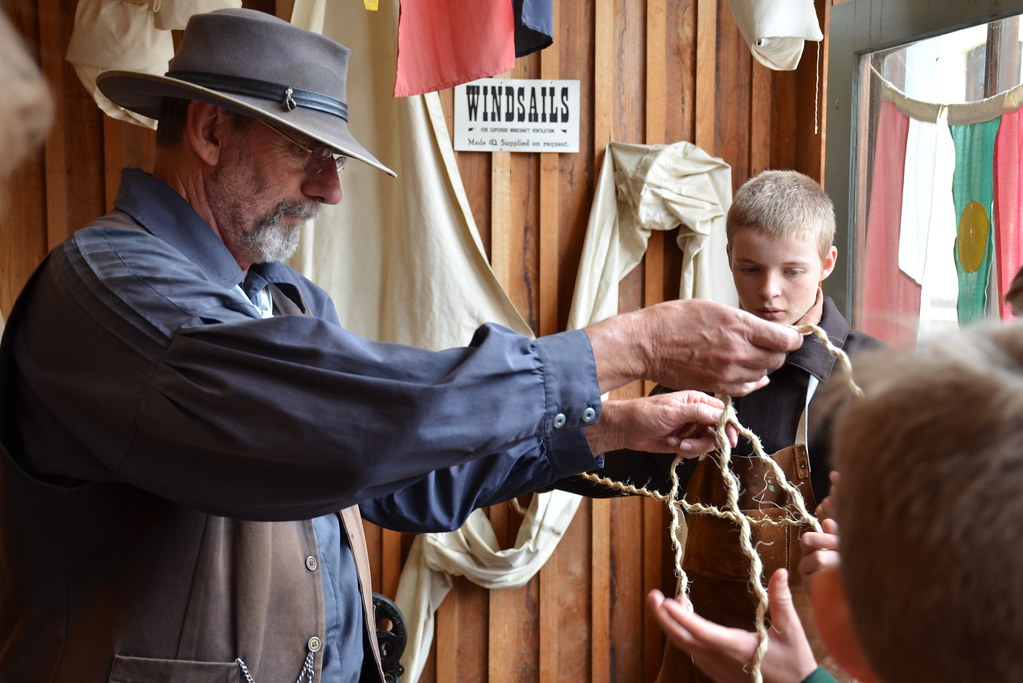
She teaches the splice every spring at a small workshop in the Dingle community centre, six students, one Saturday morning, a fee of forty euros that goes to the local lifeboat fund. Most of her students are weekend sailors from Tralee and Killarney who have never spliced a rope in their lives.
Some of them never will again. A few become quietly obsessed and come back the following year with their own fids and a sheepish look.
She tells them what her uncle told her. A splice is not faster than a knot. It is stronger and cleaner and lasts longer. The boater who learns to splice is the boater who chooses the rope before they choose the knot.
That, she says, is the order of operations. The rope first. Then the splice. Then, only if no splice will do, the knot.
Filed under