Margo Halpern keeps a 31-foot Cape Dory cutter named Eilean at a mooring in St. Andrews, New Brunswick. The mooring sits in 9 feet of water at low tide and 36 feet at high. The Bay of Fundy, in its upper reaches, runs to an extreme tidal range of nearly fifty feet.
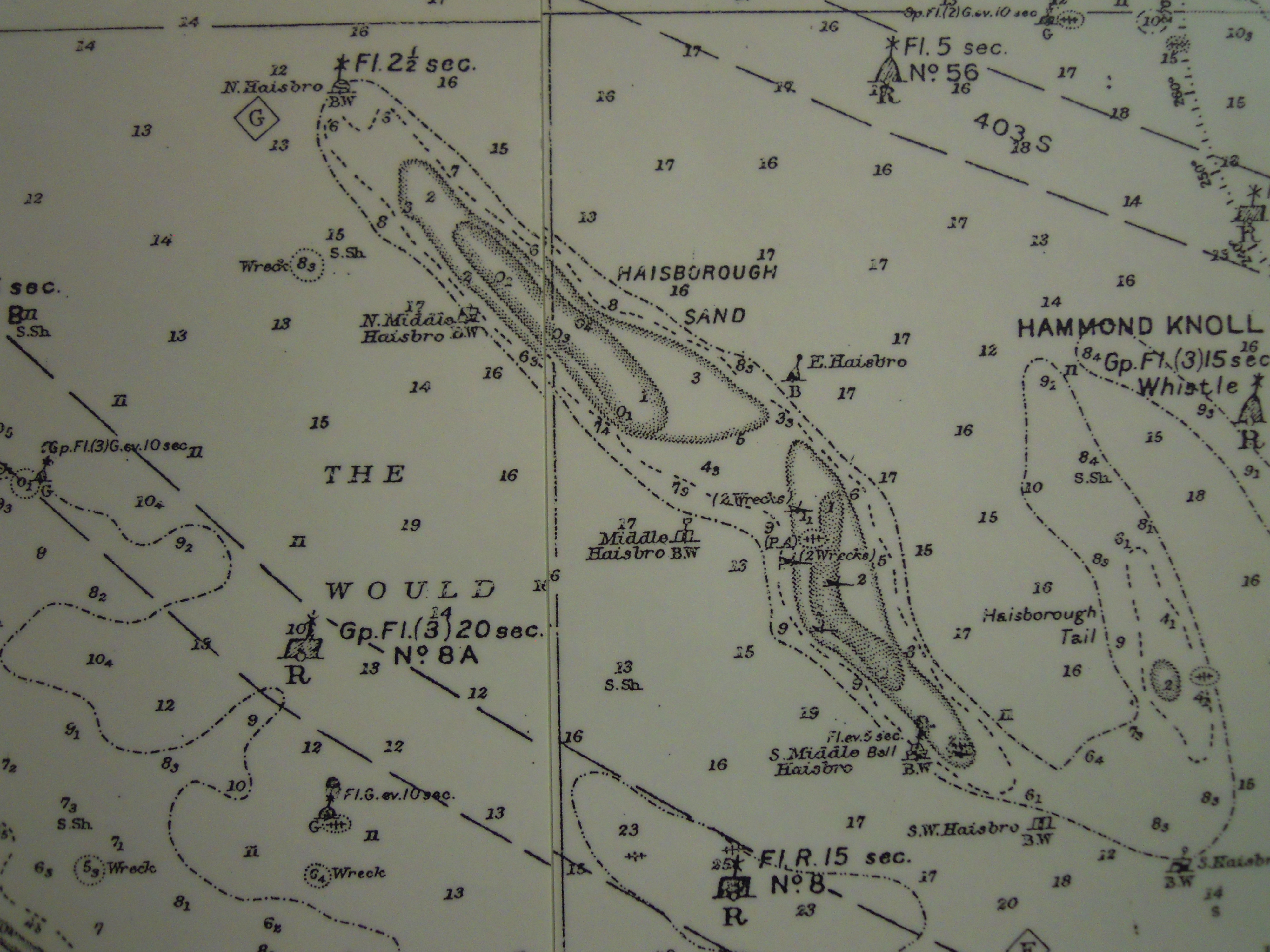
On the morning of 4 June 2026, in calm conditions, Halpern grounded Eilean on a mud bar approximately two miles from her mooring. The chart she was using, Canadian Hydrographic Service chart 4340, showed a sounding of 6 feet at her grounding position.
She was, at the moment of grounding, in approximately 4 feet of water.
She was not careless. She was operating within the bounds of what she understood the chart to be telling her. The chart was telling her something else.
The Canadian Hydrographic Service, like most modern hydrographic offices, refers its soundings to a tidal datum called Lower Low Water Large Tide, abbreviated LLWLT. This is, roughly, the lowest water level expected at the location under typical astronomical tidal conditions over a 19-year cycle.
It is not the lowest water level possible. Below LLWLT, soundings will be shallower than charted.
On 4 June 2026 the actual low water at St. Andrews was approximately 1.8 feet below LLWLT, due to a combination of a perigean spring tide and a high-pressure weather system that suppressed sea level by approximately 0.4 feet beyond the astronomical prediction.
Halpern's chart had told her, accurately, that the bar carried 6 feet at LLWLT. The actual water was about 4.2 feet. Eilean draws 4 feet 9 inches.
She floated off two hours later on the rising tide with no damage other than embarrassment.
The case is instructive because most boaters, including most coastal cruisers, do not understand the chart datum they are using.
American charts use the Mean Lower Low Water datum, abbreviated MLLW. This is the average of the lower of the two daily low waters over a 19-year tidal epoch. Like LLWLT, it is a statistical low, not a guaranteed minimum.
British Admiralty charts use Chart Datum, which is generally set at the level of Lowest Astronomical Tide, or LAT. This is the lowest predicted water level over a long tidal cycle, lower than either MLLW or LLWLT, and intended to provide a more conservative reference.
An American skipper accustomed to MLLW who switches to a British chart will find the same sounding will give him slightly more water than he expects, on average. The reverse is also true.
Tide tables, which most boaters consult routinely, predict the height of the tide above the chart datum at a given time. A tide table prediction of "low water 0.3 feet" means that at the predicted time, the water will be 0.3 feet above the chart datum, and therefore that a charted sounding of 6 feet will actually carry 6.3 feet.
When the prediction is negative, as it often is on perigean springs, the actual water is below the chart datum and the charted sounding is reduced accordingly.
On the morning of Halpern's grounding, the tide table for St. Andrews predicted a low water of minus 1.4 feet. The actual low water was approximately minus 1.8 feet, due to barometric effects.
She had consulted the tide table. She had factored in the predicted minus 1.4 feet. She had not factored in the additional barometric drop, which on the morning in question was published as a weather warning by Environment Canada but which she had not seen.
The lesson is not that Halpern should have been more careful. It is that the chart, the tide table, and the weather, taken together, leave room for a foot or so of additional uncertainty in either direction even when all three are used correctly.
A keelboat skipper navigating shallow water under any datum should, as a working rule, add at least half a meter of safety margin to whatever the chart, the tide table, and the meteorological forecast jointly suggest.
In high-range tidal waters, like Fundy, the Bristol Channel, the Cook Inlet, or the Severn Estuary, the margin should be doubled.
Halpern now uses, in addition to her chart and tide table, a small barometer mounted near the companionway. Before any passage in shoal water she checks the barometric tendency. If the pressure is high and rising, she adds another foot of margin to her depth allowance.
She has not grounded since.
She also keeps, taped to the inside of the chart table, a small printed card listing the chart datums used by every chart in her folio and a brief reminder of what each one means.
It is, she says, the most useful piece of paper she has ever made.
Filed under