From the parking lot at Pier 39 in Astoria, the building that holds the last sardine line on the lower Columbia is unremarkable. Corrugated metal, painted blue some years ago, two roll-up doors, one office window. A forklift is idling under the overhang at 7:14 in the morning.
Inside, a conveyor belt is moving small whole Pacific sardines past four women in white smocks and hairnets. The women are checking for the few fish that should not be on the line. The conveyor is fed from a refrigerated holding tank that took delivery, last night, of about eleven thousand pounds.
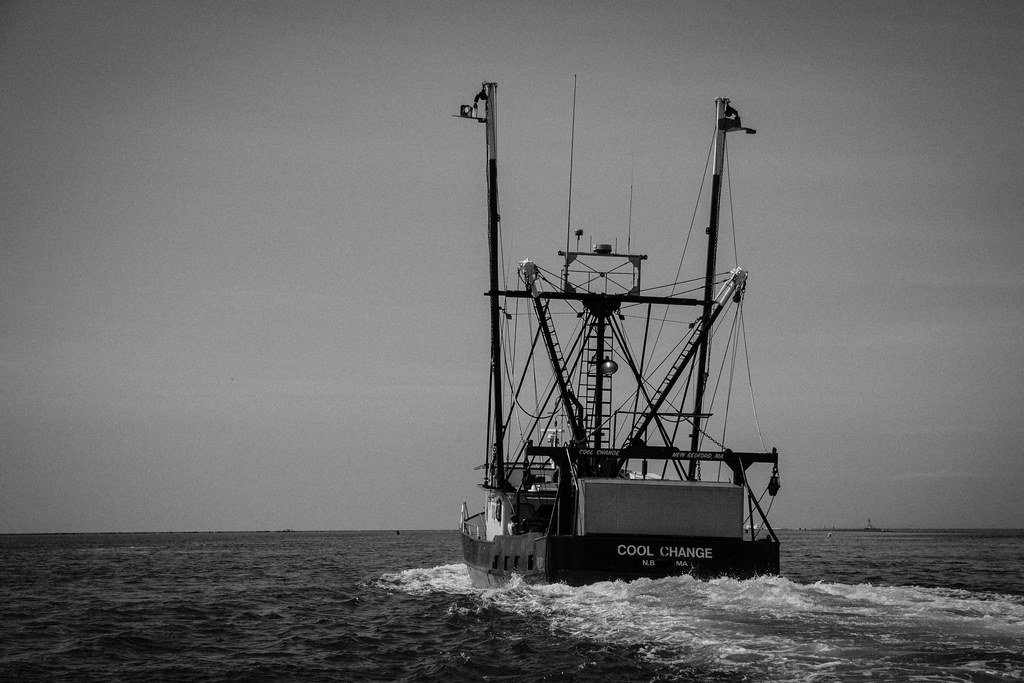
The fish came in on the Donna Marie, a 58-foot purse seiner out of Warrenton, owned and run by a man named Vince Pacheco whose family has fished out of the lower Columbia since 1936. Pacheco has been catching Sardinops sagax for twenty-nine years. He says the runs are not what they were in 2007.
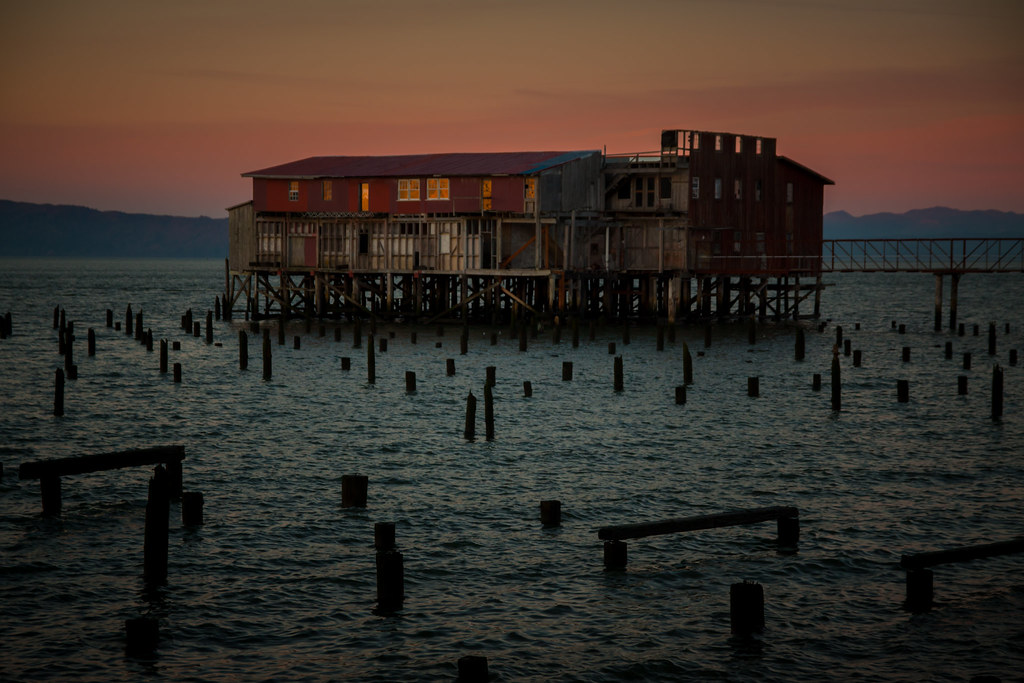
Astoria once had thirty canneries along the river. The peak was around 1945, when the canneries here packed something like 1.4 million cases of salmon and pilchard between them and employed about four thousand people on the shifts that ran around the clock through the summer.
By 1980, there were six canneries left. By 2010, there were two. As of April 2026, there is this one. It is run by Bornstein Seafoods, a fourth-generation family company founded in Bellingham in 1934 and present in Astoria since the early 1980s.
The plant manager is a woman named Patty Ostrom, who started at the salmon line next door in 1991 and moved to the sardine room in 2008. She is fifty-seven and has the precise, slightly distracted manner of someone who has been in charge of a small factory for a long time.
Ostrom says the line runs three days a week from April through October, weather and fish permitting. The pack last year was about 18,000 cases. The peak Astoria sardine year, 1939, was 1.1 million cases. The math is not subtle.
What the cannery still does well is the part of the process that has not changed since the 1920s. The fish are cut and packed by hand into flat oval cans, brined, sealed, and cooked under pressure in a retort. The can codes are stamped on the lids by a machine that was installed in 1978 and has been rebuilt twice.
The labels on the cans vary. Bornstein co-packs for several brands, including a small specialty importer in San Francisco, a Portuguese-American label out of Newark, and a Pacific Northwest cooperative that sells through farmers' markets. The same fish, packed within ninety minutes of each other, end up on shelves five thousand miles apart.
Pacheco's boat is one of fourteen still licenced to seine for sardines in Oregon waters. The federal stock assessment for the northern subpopulation of Pacific sardine has been pessimistic for fifteen years. The directed fishery was closed in 2015 and has been opened only intermittently since.
What Pacheco is catching this week is being taken under the live bait and minor directed allocations that survive in the off years. The numbers are small. The price, at $0.42 a pound to the boat, is higher than it was in 2010 but lower than the price of catching the fish.
On the cannery floor, the four women at the inspection belt are joined at 8:00 by a fifth, a woman named Rosa Aguilar who has been on the line for nineteen years and who, at fifty-one, is among the younger workers in the room.
Aguilar works the patera, the small flat tray on which the cut fish are arranged in the can. She does about 2,400 cans an hour, by hand, with a small forked knife. The work is repetitive and not unskilled. New hires take six weeks to reach speed.
By 11:30 the morning's catch has been packed into 1,460 cases of six-ounce flats. The retort cooks them for ninety minutes at 240 degrees Fahrenheit. The cans cool overnight and ship to a labeller in Portland the following day.
The Bornstein operation in Astoria employs forty-three people at the moment, down from sixty in 2018 and from one hundred and twelve in 2005. Most of the layoffs were in the salmon plant next door, which now runs only a six-week summer season for Chinook from the Columbia gillnet fleet.
Ostrom is not sentimental about the building. She points out that the roof leaks over the receiving bay and that the wiring for the retort is, in her phrase, original equipment. She has a capital request in for both repairs. She has had a capital request in for both repairs since 2019.
What keeps the cannery open is not the sardine line by itself. It is the combination — sardine in spring and fall, salmon and tuna in summer, a small albacore pack that ships to specialty grocers in Seattle and Portland — and the fact that Bornstein still owns its receiving dock and does not pay rent.
Astoria's economy, which was largely fish for a hundred years, is now largely tourism, brewing, and the small federal payroll attached to NOAA's regional office at Hammond. The cannery's continued existence is, in that context, an anomaly rather than a sector.
The mayor of Astoria, Bruce Jones, has said publicly that the city would like to keep one working cannery on the river. The city does not have many tools for ensuring this. A property tax abatement, granted in 2023, runs through 2031.
Pacheco will go out again tonight if the forecast holds. The boat needs to make about fourteen thousand pounds a trip for the math to work. He has not made that average in three weeks. He has been a fisherman long enough to know that the average does not have to hold for him to keep going.
At 2:15 in the afternoon the last cans of the day come off the retort. Ostrom checks the codes and signs the production sheet. The forklift moves the pallets to the cooler. The women clock out at 3:00. The cannery will be quiet until Wednesday morning.