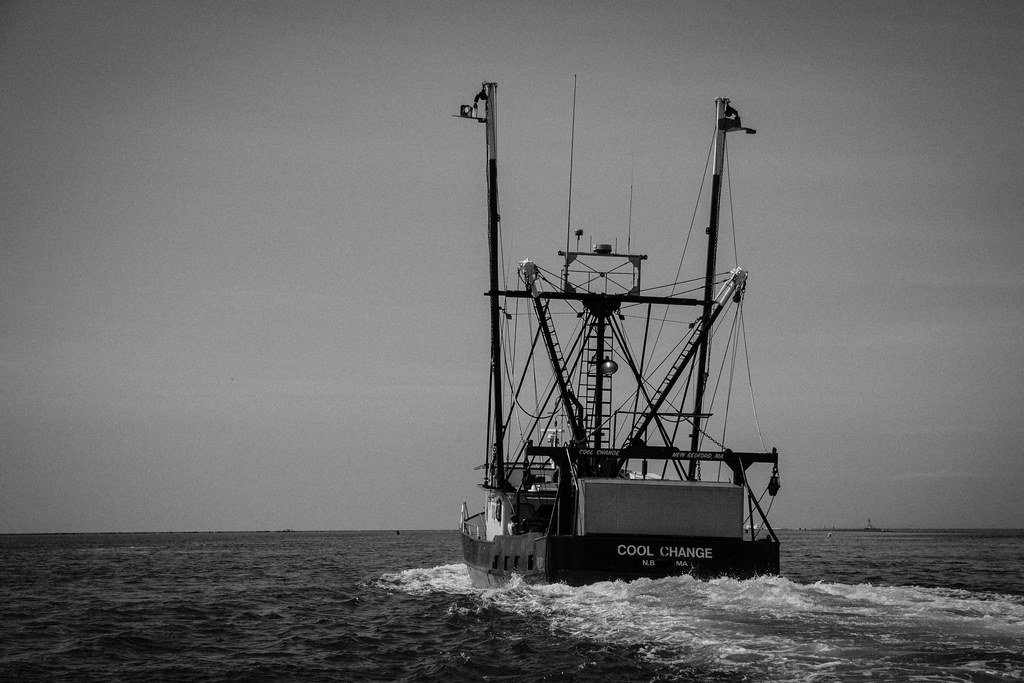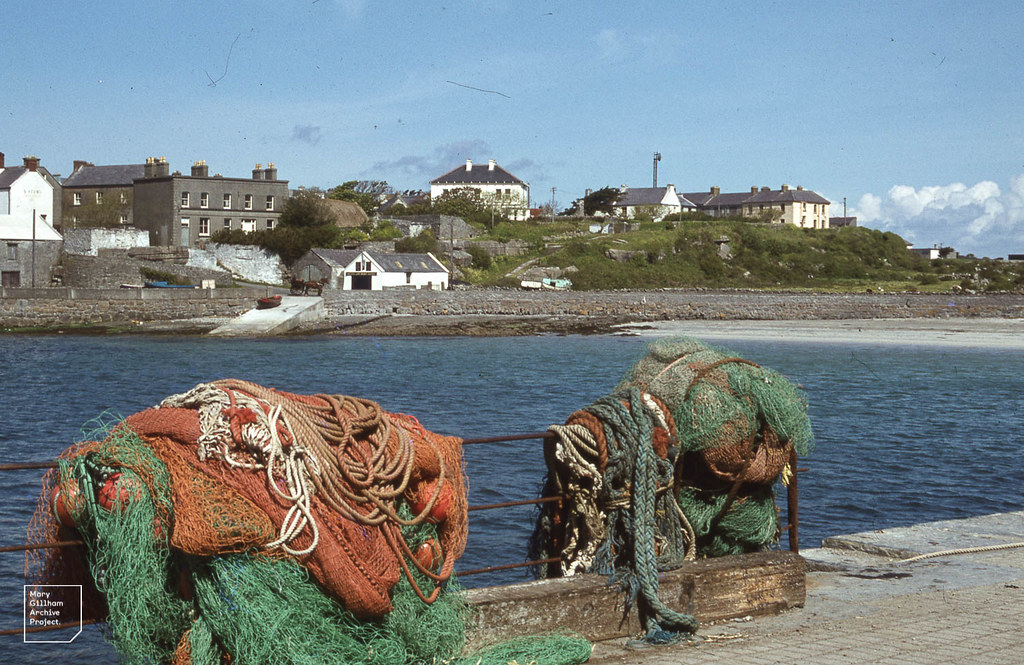
Pádraic Mullins ties off the Caoimhe Anne at the inner berth of Kilronan pier at 4:30 on a Monday afternoon in May and the wind, which has been northwesterly fifteen all day, is starting to back. He has been at sea since six in the morning. He has 84 kilos of pollack and 31 kilos of ling in iced boxes on the deck.
Mullins is sixty-one. He has fished out of Kilronan since 1981 and out of his current 31-foot Cygnus hull since 2009. The boat carries twelve longline tubs, each of which holds about 600 metres of nylon mainline and roughly 300 hooks baited with cut mackerel.
Inishmore, the largest of the three Aran Islands, lies about thirty kilometres off the Galway coast. The Irish-speaking village of Cill Rónáin, anglicised as Kilronan, has been a fishing port since before the famine. The pier was rebuilt in 1888, extended in 1937, and dredged most recently in 2018.
In the 1990s, twenty-two boats worked out of Kilronan. As of May 2026, there are six. Two more boats are owned on the island but berthed in Rossaveal on the mainland. The reduction has not been a single decision. It has been a long subtraction.
The species mix has changed. Mullins's father fished mainly for cod, haddock, and whiting on grounds within an hour's steam of the pier. Cod has been functionally absent from the inshore for a decade. Haddock is occasional. What the longliners catch now is pollack, ling, conger, and, in summer, blue shark.
The longline is older technology than almost anything else on the water. A horizontal mainline laid along the bottom, with shorter snoods every two metres ending in baited hooks. It is selective, low-impact, and labour-intensive. It is also, in shallow water, less productive per hour than a trawl.
The advantage of the longline, for an inshore fishery in 2026, is that it lands a higher-value fish. Pollack from a longliner reaches the market within twelve hours, unbruised, with the gills still red. The price at the Galway fish market is roughly €4.20 a kilo. The price for trawler-caught pollack is closer to €2.30.
Mullins sells his catch to a buyer who drives down from Galway twice a week. The buyer takes the iced boxes off the pier at 5:00 and the fish are on a refrigerated truck to the Galway market by 7:30. The longest part of the journey is the ferry from the island to Rossaveal.
On Tuesday the wind comes up and the boats stay in. Mullins spends the morning at the pier, sitting in the wheelhouse of the Caoimhe Anne with a flask of tea, splicing a new gangion to a snood that broke yesterday on a conger.
The other men in the harbour are doing similar work. Tomás Fitzpatrick, who runs the Saoirse, is rebaiting tubs at the table outside the small fishermen's shed at the head of the pier. Conor Flaherty is repainting the gunwale of the Brigid Joan. Two of the boats have been hauled for maintenance and will not fish this week.
The Bord Iascaigh Mhara office in Galway has classified the Aran inshore fleet as one of about a dozen small-boat communities for which a special inshore management plan was drafted in 2022. The plan, which is voluntary, sets a daily landing cap of 150 kilos per boat for pollack and ling.
Most of the Kilronan longliners do not reach the cap on most days. The cap has not been the binding constraint. The binding constraint has been weather, then bait supply, then markets, then crew.
Crew is the hardest of these. Mullins has been fishing alone for the past four years. The day before he turned sixty he hauled twelve tubs single-handed and decided he could keep doing it for another five years. He is in year three of the five.
On Wednesday the wind drops and the boats go out. Mullins steams east-southeast for ninety minutes to a ground he calls the Foul, which is marked on the chart as an area of broken bottom in 35 to 50 metres of water. He shoots six tubs in a line running roughly east-west and reads a paperback novel for forty-five minutes while the lines soak.
The hauling takes two hours. The first tub produces fourteen pollack and two ling. The second produces six pollack, one conger, and nothing else. The third tub, which has drifted into rougher ground, produces three small ling and a quantity of broken hooks that will require an evening's work to replace.
By 2:15 he has 71 kilos aboard. He hauls the last three tubs in a different direction, picks up another 28 kilos, and steams home. The fish are iced at sea. The boxes are on the pier by 4:50.
The economics, for a single-handed inshore boat in 2026, work in months rather than days. A good month for Mullins, gross, is about €4,800. Diesel, ice, bait, and gear are roughly €1,200. The boat insurance is €2,100 a year. The licence fee is €380.
What is left, after he pays himself a small wage and sets aside a modest amount for the inevitable engine rebuild, is not enough to keep a young person interested in the work. The two apprentices who started on island boats in 2022 have both left for the mainland.
The Aran Islands have a population of about 820 in 2026, down from 1,280 in 1996. The decline is not driven by the fishery alone. It is driven by housing, by school enrolment, by the closure of the small hospital on Inishmore in 2019, and by the long pull of the Galway labour market.
Mullins is asked, on the pier on Thursday morning, what he thinks the fishery looks like in ten years. He considers the question and says, in Irish first and then in English, that the fishery has been ten years from over for forty years.
What he does not say is that he is right and wrong at the same time. The fishery has not ended. It has shrunk into something that does not look much like a fleet and that depends, for its existence, on a small number of older men who have not yet decided to stop.
Filed under