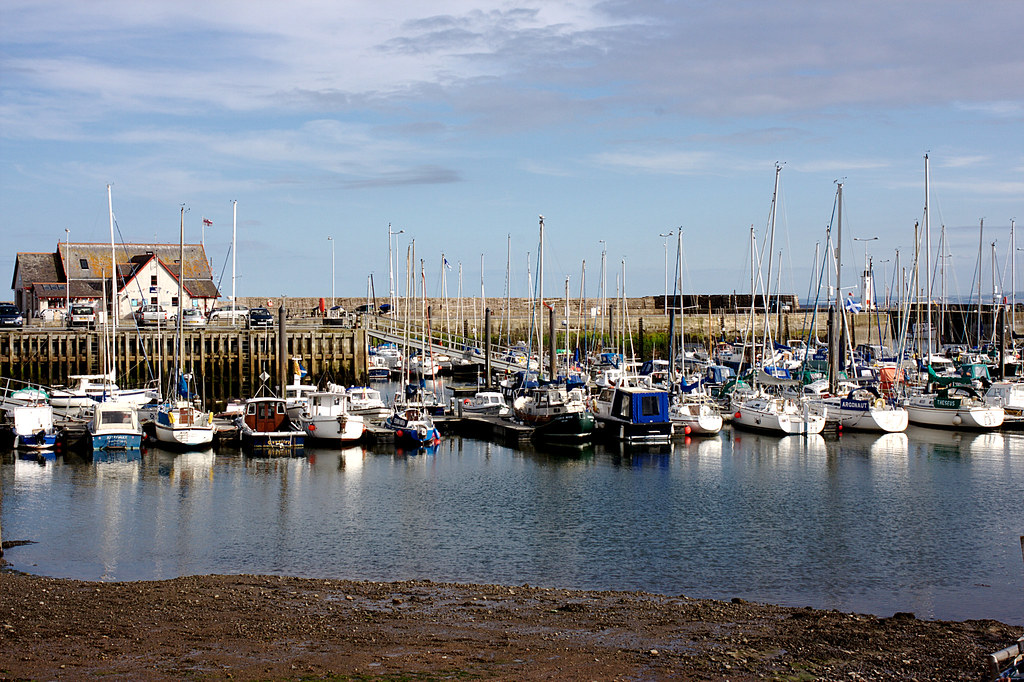
On a Friday morning in February with a hard frost on the cobbles, the Anstruther Fish Bar opens at eleven thirty as it has for fifty-six years. The smell of beef dripping carries down Shore Street as far as the lifeboat station. Inside, the woman at the counter, Frances Pittendreigh, sets out the day's first batch of haddock fillets, dipped and ready.
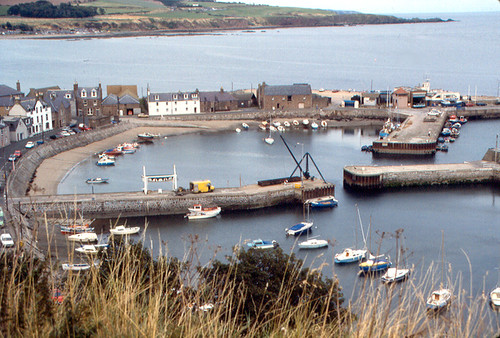
Anstruther sits on the south coast of Fife, looking across the Firth of Forth toward the East Lothian shore. Its population, around 3,500, holds steady through the year, which makes it unusual among the East Neuk villages. Crail to the east loses a third of its residents in winter. Pittenweem to the west loses fewer but counts more closed doors.
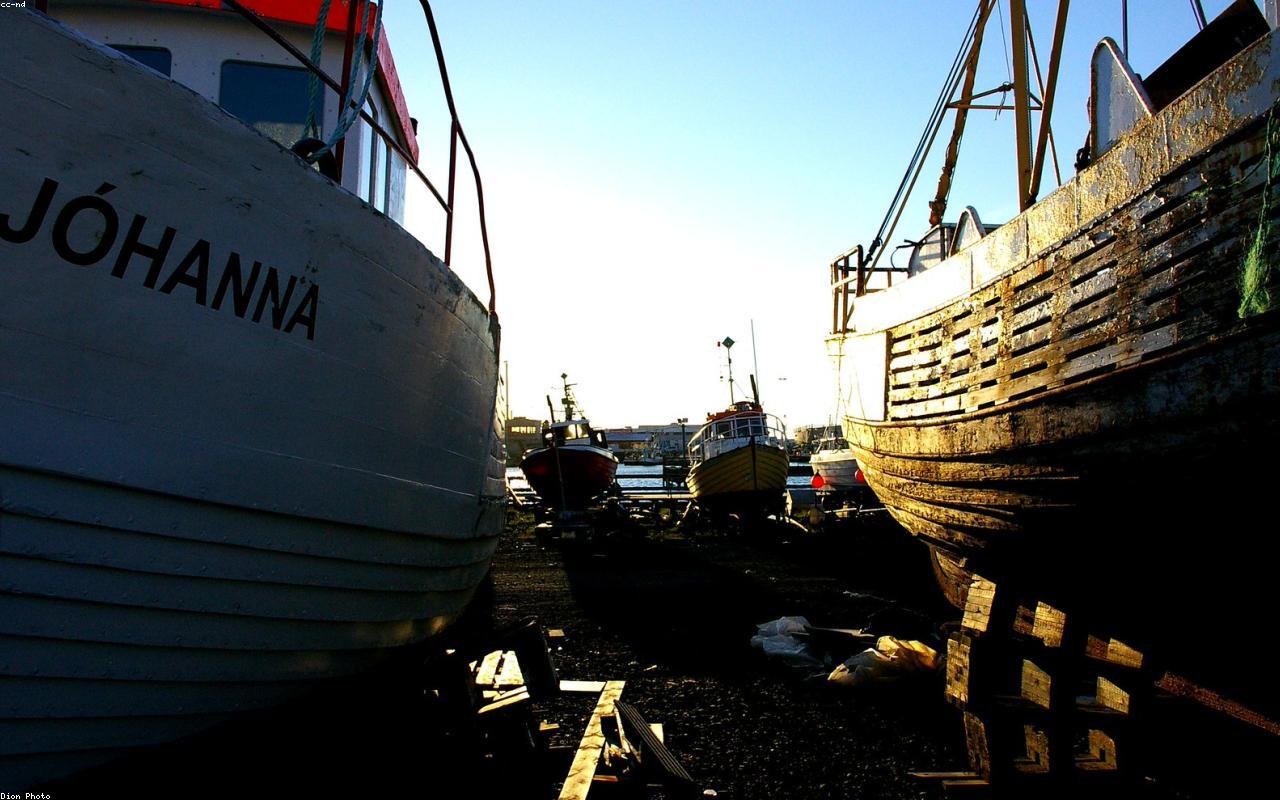
In Anstruther in February the harbour holds about twenty creel boats, most of them between nine and twelve metres, painted in the blues and reds that the East Neuk has favoured for a hundred years. The boats are not fishing. The lobster and crab season here runs roughly April through November, and February is the off-month, when gear is hauled, mended, and stacked on the pier.
At the south end of the harbour, behind the Scottish Fisheries Museum, the creel-stack belonging to the Boy Ian stands six high and twelve deep. The boat's skipper, Ewan Crail, who is forty-one and has held a creel licence since 2007, was in the museum cafe with a tea, talking about Norwegian rope.
"Used to be all manila," Crail said. "Then it was polypropylene from somewhere in Yorkshire. Now it's mostly a Norwegian braid. Lasts longer, costs more. The maths still works."
The Scottish Fisheries Museum opened in 1969 in a complex of harbourside buildings dating from the sixteenth century. Its collection includes the steam drifter Reaper, restored and afloat at the harbour wall, and the sail-rigged Fifie Reaper sister vessels in models and photographs. In February the museum runs reduced hours and has its busiest restoration months.
The conservator on duty, Iona Hercus, was working on a brass binnacle from a 1923 East Fife yawl. The work, she said, was unglamorous and necessary, the sort of thing the museum does in February because nobody is asking for tours.
The Anstruther lifeboat station, on the harbour's eastern arm, houses the Shannon-class lifeboat Kingdom of Fife, placed on service in 2015. The crew is volunteer, drawn from Anstruther and the surrounding villages. The coxswain in 2026 is Murdo Tarvit, a roofer by day, who has served on the boat since 2003.
"Winter callouts are different," Tarvit said, in the crew room above the station. "In summer it's pleasure craft, fouled props, that sort of thing. In winter it's commercial vessels and the occasional walker on the rocks at the West Braes. It's quieter but it's heavier when it goes."
In 2025 the station logged 31 launches, four of them in February. The boat goes out, on average, two and a half times a month in winter and four times a month in summer. The longest service in 2025 lasted eleven hours, in a search off the Isle of May for a missing day-sailor who was found, alive, on the May itself.
The Isle of May, six miles southeast of Anstruther, sits at the mouth of the Firth of Forth. It is uninhabited in winter except by a small Scottish Natural Heritage warden team. In February the puffins are at sea. The grey seals on the May's western beaches are still nursing pups from the autumn rookery. The boat trips to the May from Anstruther's harbour run from April to September, and in February the May is the colour of a slate roof.
At the Cellar Restaurant, set back from the harbour in a 1690 vaulted-cellar building, the chef Tom Wisniewski has been writing the menu for the spring re-opening. The Cellar closes for January and re-opens in mid-February. Wisniewski, who came from a kitchen in Edinburgh in 2019, sources from the Anstruther boats when the season is on and from the Pittenweem auction the rest of the year.
"In February I'm working with cod from Peterhead and squid from Aberdeen," he said. "The local boats are not out. Once they're out, the menu changes. It's a different restaurant in May than in February. I don't fight that."
On Shore Street, the Anstruther Improvements Association keeps a small office that opens three afternoons a week in winter. The association has been buying up empty shop fronts and finding tenants for them since 2011, with mixed results. The current chair, Davina Lawley, is a retired schoolteacher who has lived in Anstruther since her marriage in 1968.
"We've got nineteen tenants in twenty-three units this winter," Lawley said. "That's the best ratio in a decade. The hard ones are the corner shops that need a hot kitchen. The economics never quite work in February, even though they work fine in July."
The Anstruther tide table, posted in the harbourmaster's office and pinned in most of the village pubs, runs with low water around eight in the morning and high water around two in the afternoon on the first Friday of February. The tidal range here is roughly four metres at springs, modest compared with the Bay of Fundy or the Bristol Channel, but enough to dry out a small harbour mouth and to drown the lower steps of the seawall twice a day.
In the evening, the wind drops and the temperature falls to minus three. The fish bar closes at nine. The lights of Crail to the east are visible from the harbour wall. To the southeast, the May light, automated since 1989 but still keeping its century-old characteristic of two flashes every fifteen seconds, marks the entrance to the Firth.
In the public bar of the Smugglers Inn, the talk on a Friday night in February is of the gear, the weather forecast for the coming week, the price of bait, and the question of whether the lobster season will open on the eleventh of April or the eighteenth. The opinions divide evenly, which is the East Neuk way of saying nobody knows.
Ewan Crail, walking back to his cottage at the top of the brae, said the boat would be in the water by the third week of March, gear in by the first week of April, and the first creel hauled before the end of the month. He said this in the tone of someone who has said it twenty times before and expects to say it twenty more.
Filed under